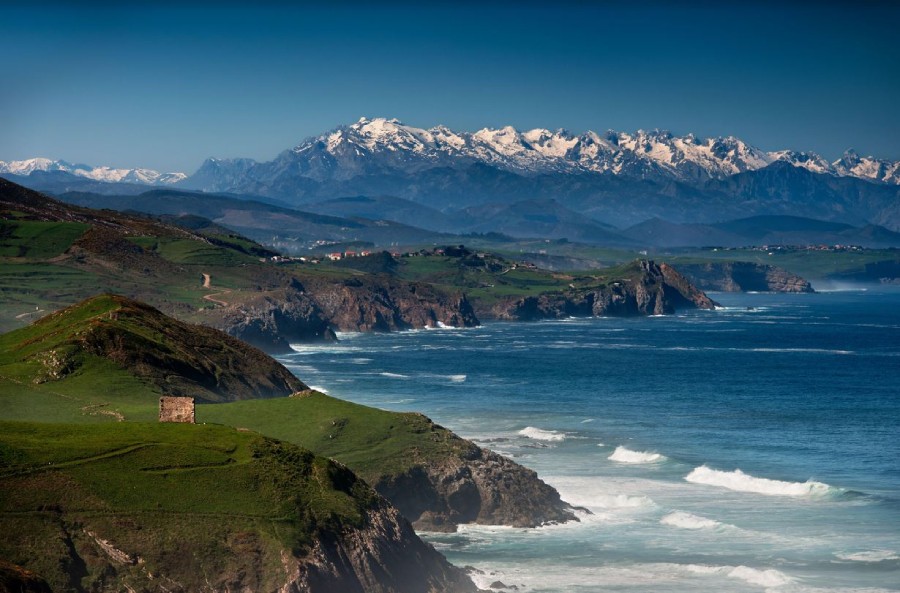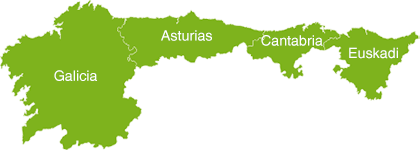



On cold winter days, nothing is more comforting than a sweet treat. And if, in addition, you are traveling through Green Spain, visiting solitary beaches or walking through forests covered with an autumnal blanket of leaves, a stop along the way to recharge calories can be the best of plans. We have selected four typical cakes from the north, some are decades old, others have just risen to fame on Instagram. All of them will leave you with the best taste in your mouth. Guaranteed.
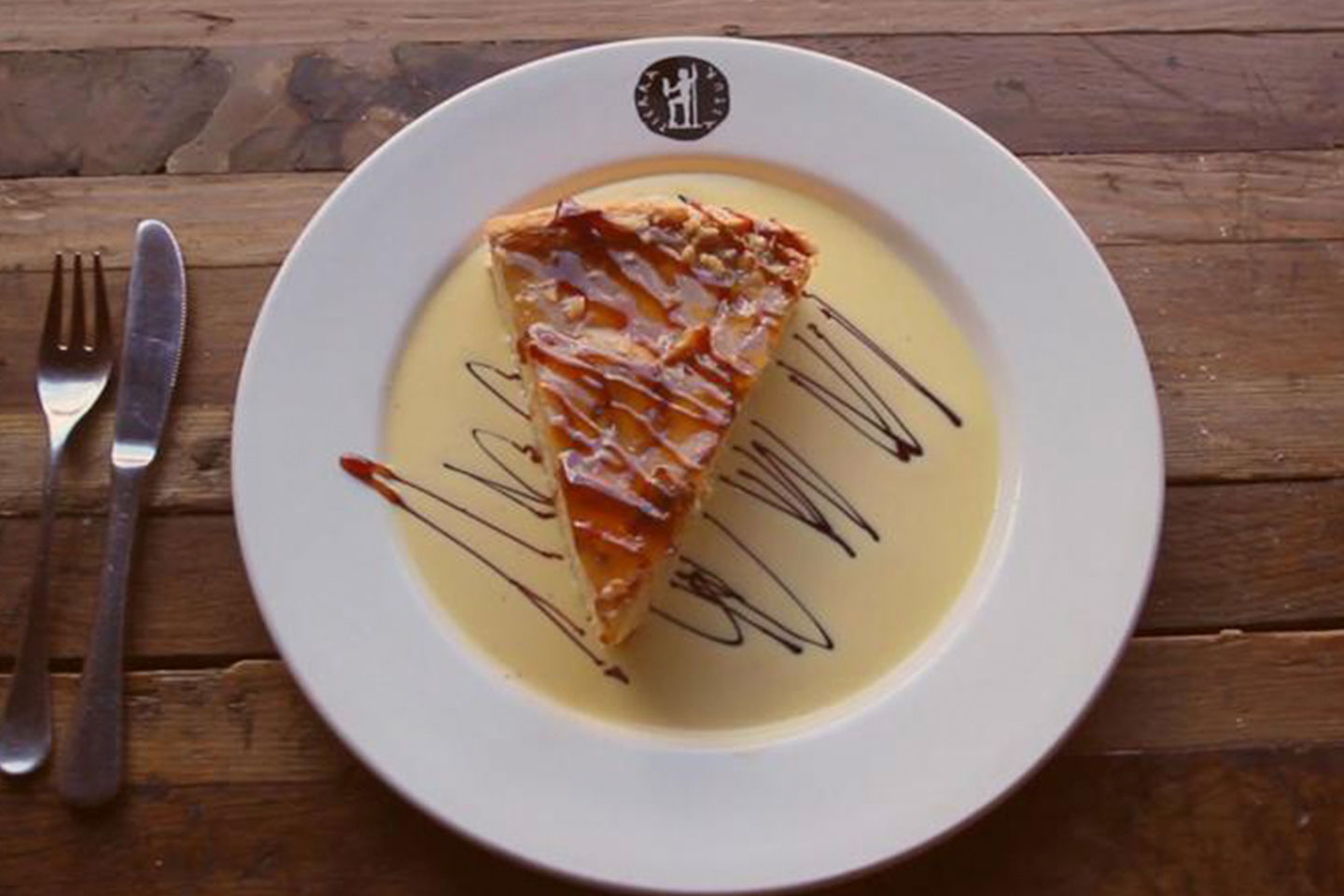
Asturian apple pie. Asturias
What is the recipe for Asturian apple pie?
There are many apple pie recipes, we are not going to fool anyone. We are talking about one of the most universal fruits that is grown and consumed in a large part of the planet. What makes the different recipes prepared in Asturian ovens special? Mainly, centuries of know how, the use of local and natural products, and a process that is as simple as it is conscientious: good baking does not forgive improvisation. One last piece of advice: some Asturian pastry shops enrich the traditional recipe (flour base, pastry cream and apple topping) with small tricks such as adding jams (from the apple itself or even apricot) or sliced almonds
What is the history of Asturian apple pie?
It is impossible to know it exactly but easy to intuit, especially considering Asturias’ maritime connections with Europe. Although the key ingredient, the apple, has been a protagonist in Asturian gastronomic culture for centuries, it is in the 19th century when pastry influences and techniques from France or England arrived in Spain. For decades, Asturian apple pie was one of the many recipes prepared in households of the Principality as a way of making use of surplus fruit.
Over time, apple pie became established as a typical dessert at festivities and pilgrimages, especially in autumn, coinciding with the ‘mayanza’ season, during the apple harvest for cider.
In which city or town can I try Asturian apple pie?
There are many Asturian cities and towns where apple pie is made in pastry shops, cafés or restaurants, especially highlighting some legendary establishments in Oviedo and Gijón. All the pies are similar and, at the same time, radically different, depending on the recipes or the final accompaniments (ice creams, creams…) that go with them. There is a time of year when devotion to apple pie reaches its highest levels, during the celebration in October of the Villaviciosa Apple Festival, where bakeries and pastry shops compete for the best pie of the year.
What other cakes or sweets from Asturias do you recommend?
Generally, there is unanimity when it comes to considering ‘carbayones’ a small masterpiece of Asturian pastry. These are small puff pastry cakes filled with a delicious marcona almond paste and covered with a glaze of egg yolk and sugar. Impossible to eat just one.
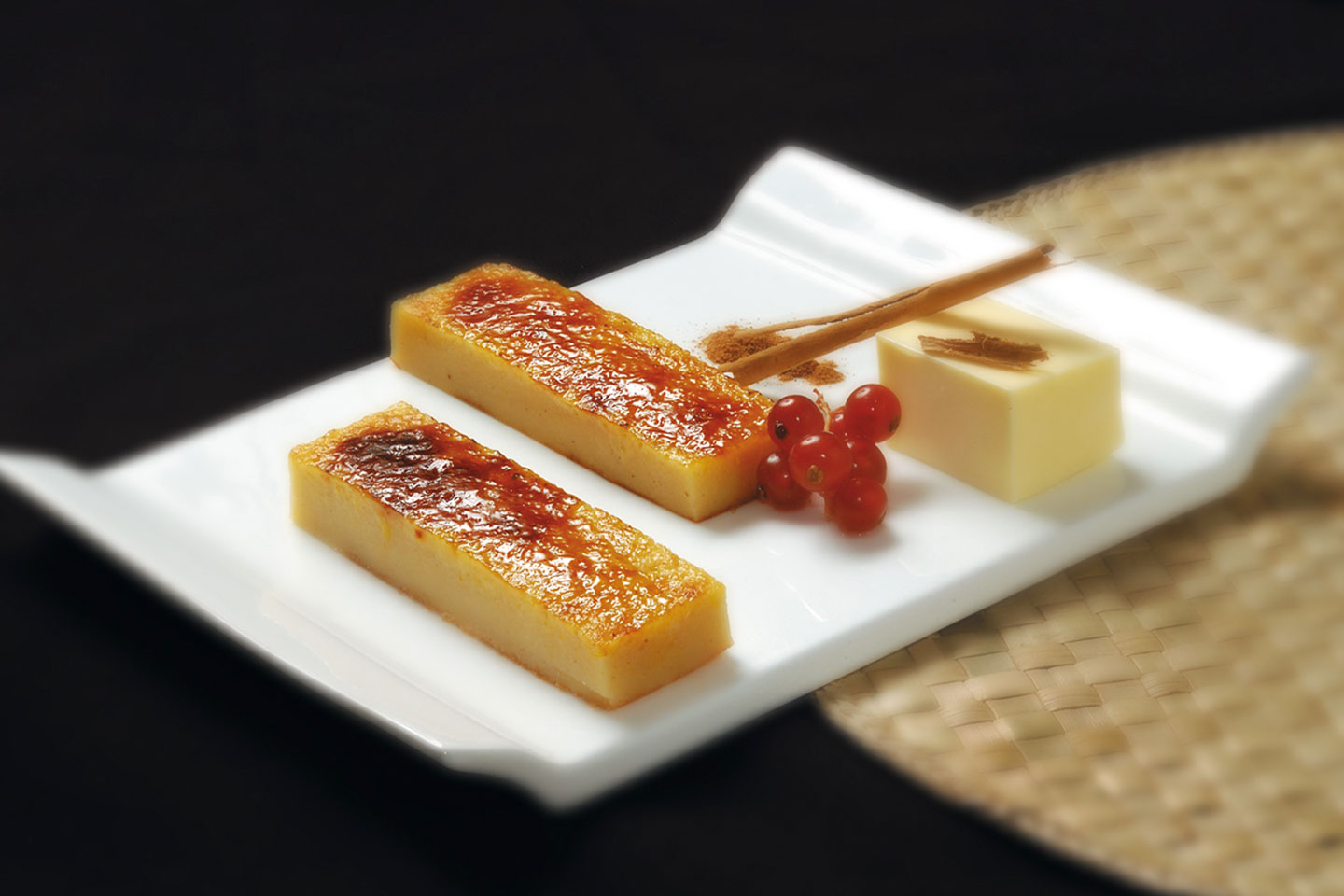
Puff pastry cake from Torrelavega. Cantabria
What is the recipe for the Torrelavega puff pastry cake?
Devilishly simple and, at the same time, devilishly complicated, since it is essential to make it with homemade, artisan puff pastry, which complicates the process. What does it consist of? Layers of puff pastry alternating with buttercream and, on top, sliced almonds and icing sugar.
What is the history of the Torrelavega puff pastry cake?
Like so many other stories, the Cantabrian town of Torrelavega’s love affair with refined pastry is the result of the perseverance of a few entrepreneurs who, decades ago, fell in love with one of the greatest gastronomic inventions in history: puff pastry. In the mid 20th century, several pastry chefs in the city began to perfect a simple but exquisite recipe: thin layers of crunchy puff pastry alternating with delicious buttercream and topped with a hat of sliced almonds and icing sugar. It is true that there are many versions of this pastry classic both in Spain and Europe, but it was several local (and family run) pastry shops in Torrelavega that made the difference thanks to two factors: on the one hand, exquisitely and conscientiously working the puff pastry and, on the other, benefiting from Cantabria’s extraordinary butter production.
In which city or town can I try it?
There is no doubt about it: the best place to try it is Torrelavega, in the heart of Cantabria and just a few kilometres from Santander. Once there, it is easy to come across some of the historic confectioners and pastry shops that continue to work in an artisanal way, remain faithful to the original recipe and everything that entails: no industrial ingredients, techniques or colorings are used, everything is natural and only the best raw materials. The great advantage of puff pastry cake is that it is eaten at room temperature and can be enjoyed on the spot or taken away in a box (or several) to safely prolong the pleasure of eating it a couple of days later. By the way, puff pastry lovers (there surely are some) have an annual date every August at the Puff Pastry Fair held in Torrelavega for more than ten years.
What other cakes or sweets from Cantabria do you recommend?
It is no exaggeration, Cantabria is a paradise for lovers of pastry and butter. Those looking for a radically different texture from puff pastry cake will find it in another jewel of Cantabrian pastry: quesadas, a typical sweet (they cannot be considered ‘cakes’) that, like the famous and universal sobaos, come from the Pasiego Valleys.
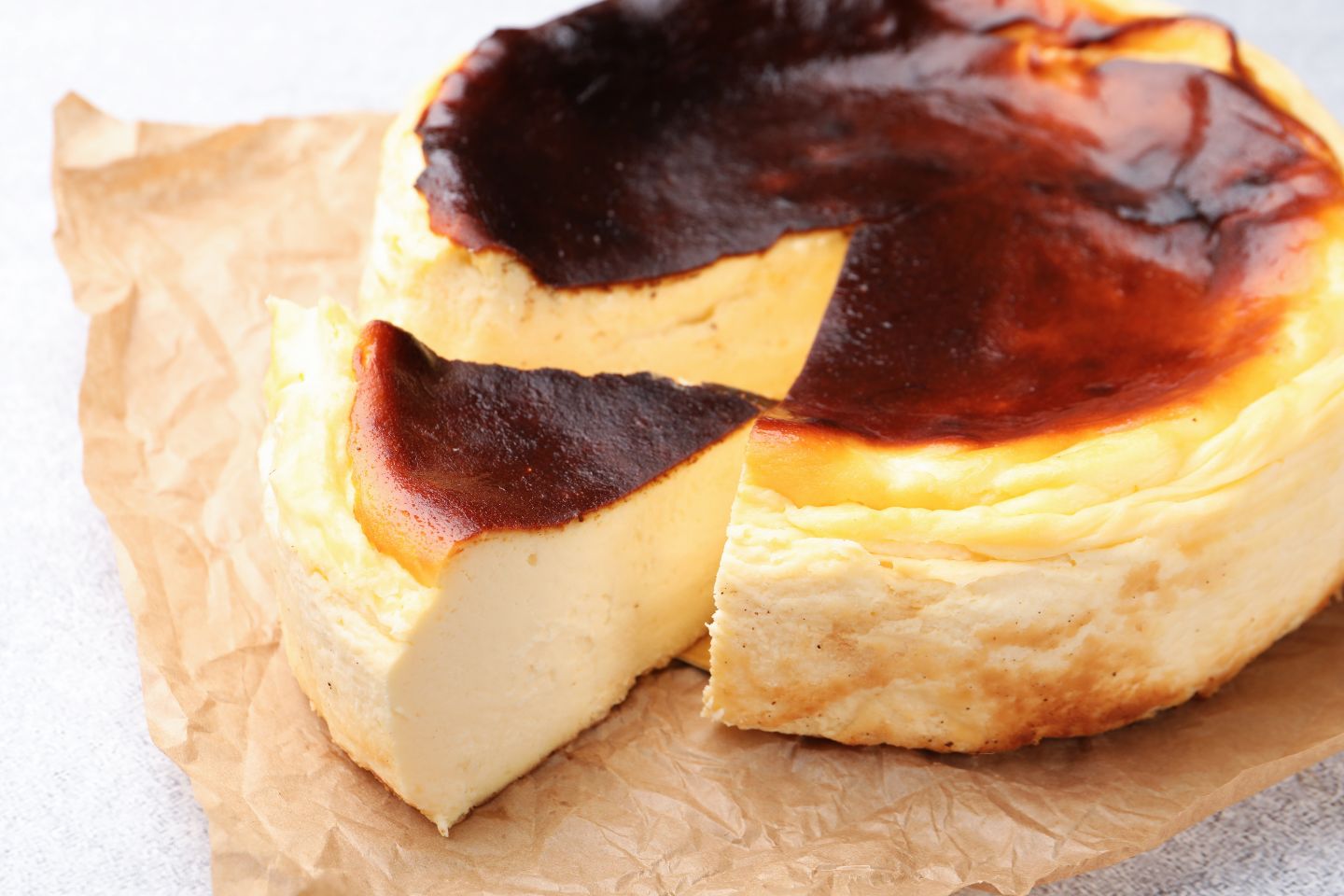
Donostiarra cheesecake or Basque Cheesecake. Donostia-San Sebastián, Gipuzkoa. Euskadi
What is the recipe for Basque Cheesecake?
It is a baked cheesecake, made from a mixture of soft cheeses and sugar. It is characterized by its creaminess and by its appearance, slightly scorched on the outside and pale on the inside. It is eaten at room temperature.
What is the history of Basque Cheesecake?
Much to the regret of other typical Donostia sweets, the city’s cheesecake is a gastronomic dish that burst onto the scene just a few years ago and, practically overnight, became a classic that has eclipsed all the others. The recipe was born in a pintxos bar on 31 de Agosto Street, as a sweet alternative to the usual variety of savoury tapas. With the tourism boom experienced by the city in the last 10 years and thanks to the impact of social media (especially those run by foreign influencers), Donostia cheesecake, universally known as Basque Cheesecake, is living through a true golden age.
In which city or town can I try Basque Cheesecake?
Donostia/San Sebastián is undoubtedly the ground zero of Basque Cheesecake, although more and more establishments throughout Euskadi are making it. It is in the Gipuzkoa capital where the tradition began, where long queues form at the original establishment and where the trend has spread to many other pastry shops and bakeries that work the product. Today, even industrial versions of Donostia cheesecake can be found in supermarkets. A very common plan is to order a portion to take away from one of the establishments in the Parte Vieja and eat it on the promenade of Paseo Nuevo, overlooking the Cantabrian Sea
What other cake or sweet from Euskadi do you recommend?
Pantxineta, a puff pastry cake filled with pastry cream and topped with toasted sliced almonds and icing sugar. It is almost one hundred years old and is inspired by the French pastry made in sophisticated Biarritz during the Belle Époque. Unlike cheesecake, this one combines creamy and crunchy textures and different temperatures, especially when pantxineta is served warm and accompanied by ice cream.
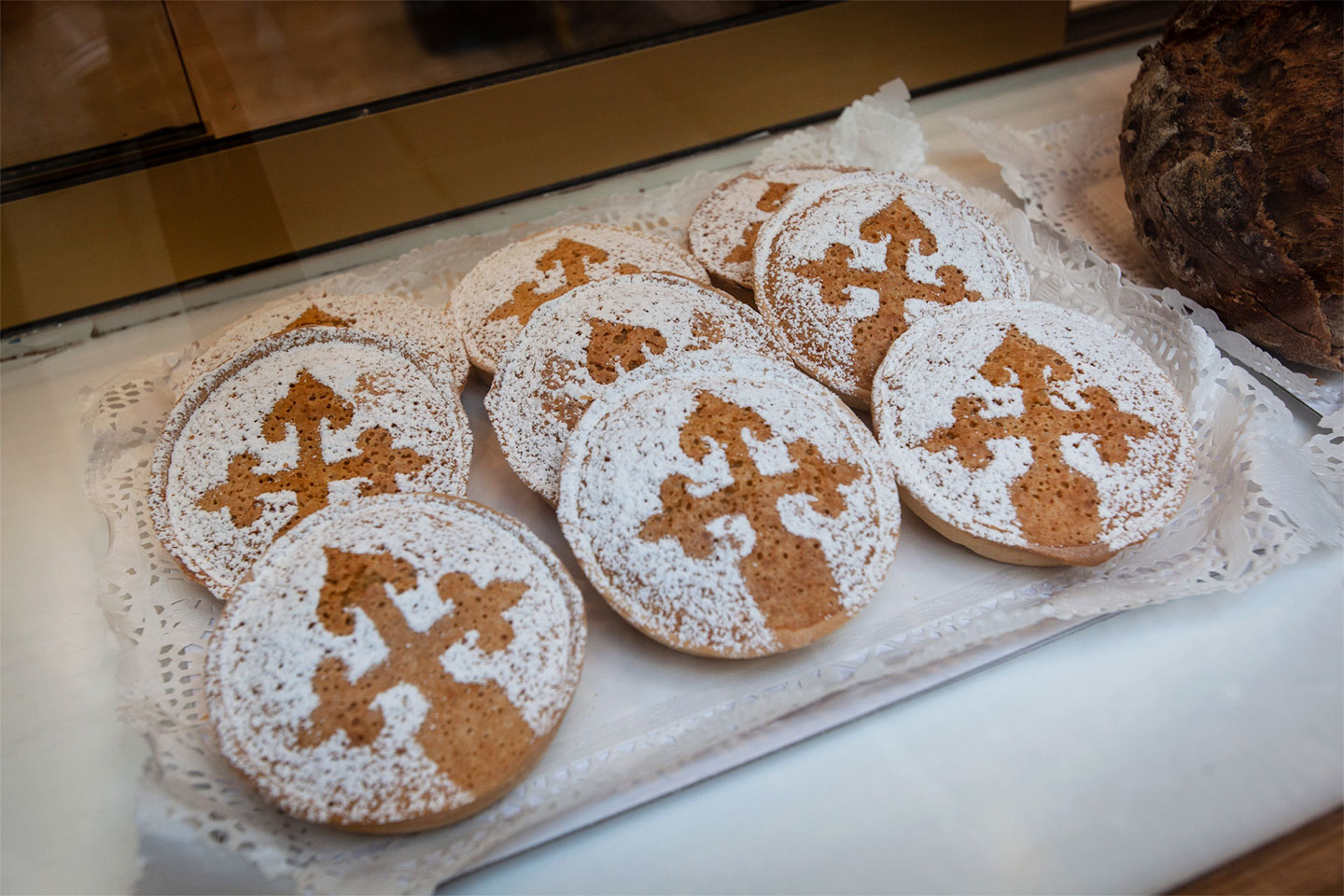
Tarta de Santiago. Galicia
What is the recipe for Tarta de Santiago?
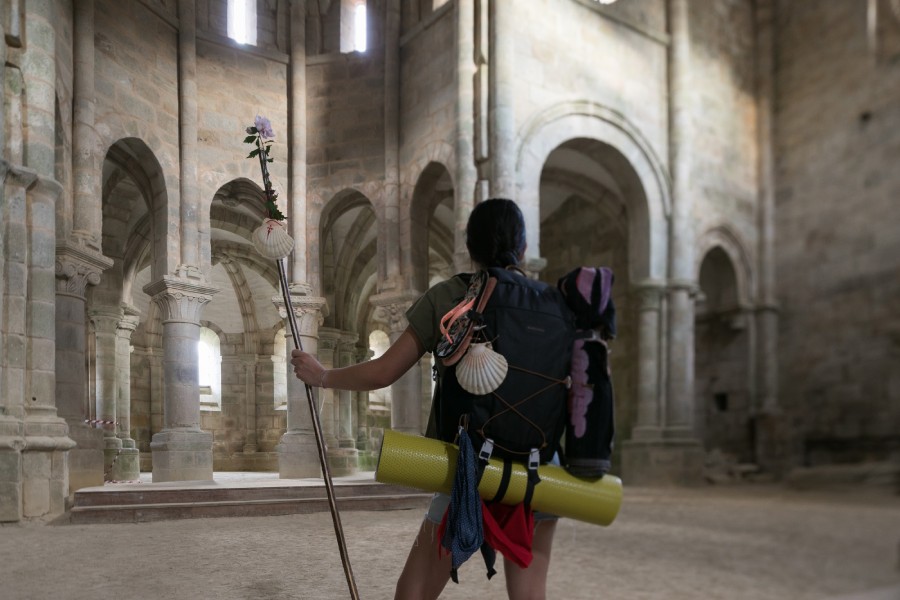
Not everyone believes that this fluffy looking cake contains no flour. And indeed, it does not. The alchemical miracle of Tarta de Santiago is due entirely to ground almonds, eggs, butter and sugar. The iconic Cross of Saint James printed in icing sugar has also played an important role in its popularization and, of course, the thousands of pilgrims from all over the world who arrive in Santiago de Compostela and fall in love with its flavour and juiciness.
What is the history of the Galician Tarta de Santiago?
Its origins sink so deeply into the crater of time that it is extremely difficult to know the how, the why or the who of this story, but there are some certainties. To begin with, there is evidence that in the 16th century there already existed a typical ‘almond sponge cake’ that was tasted in the city and which, of course, some pilgrims mentioned in their chronicles. The modern recipe was consolidated in the 19th century, when the pastry was called Tarta de Almendra, but it was in the 20th century when a pastry shop, Casa Mora, in 1925 had the idea of sprinkling icing sugar over a silhouette of the Cross of Saint James. A myth was born. In 2006, Tarta de Santiago obtained the Protected Geographical Indication, which guarantees its traditional preparation and its link with Galicia.
In which city or town can I try the Galician Tarta de Santiago?
The best place, without a doubt, is Santiago de Compostela, the spiritual capital of Galicia and the desired destination for thousands of pilgrims (those who walk, cycle or ride a horse) every year. However, the popularity of Tarta de Santiago is so enormous that nowadays it is rare to find a Galician pastry shop or bakery that does not make this product and introduce interesting nuances such as lemon and cinnamon flavours or pairings with sweet wines. How can you be sure to choose the best one? Make sure the raw materials are as natural as possible.
What other cakes or sweets from Galicia do you recommend?
Some people refer to ‘filloas’ as the ‘sisters’ of French crêpes because there is a more than evident family link: a thin preparation made with flour, egg and milk that is accompanied by the sweet topping of your choice (although there are also numerous savoury variations). The possibilities are endless: they can be served with lemon juice and sugar, with chocolate or, very appropriate for the autumn months, with roasted chestnuts. Throughout Galicia there are several fairs dedicated to filloas.