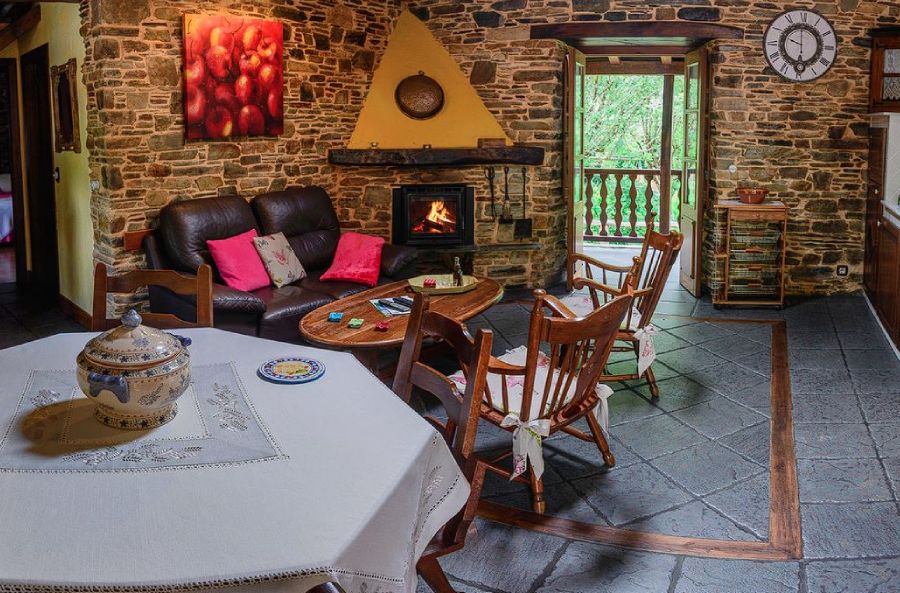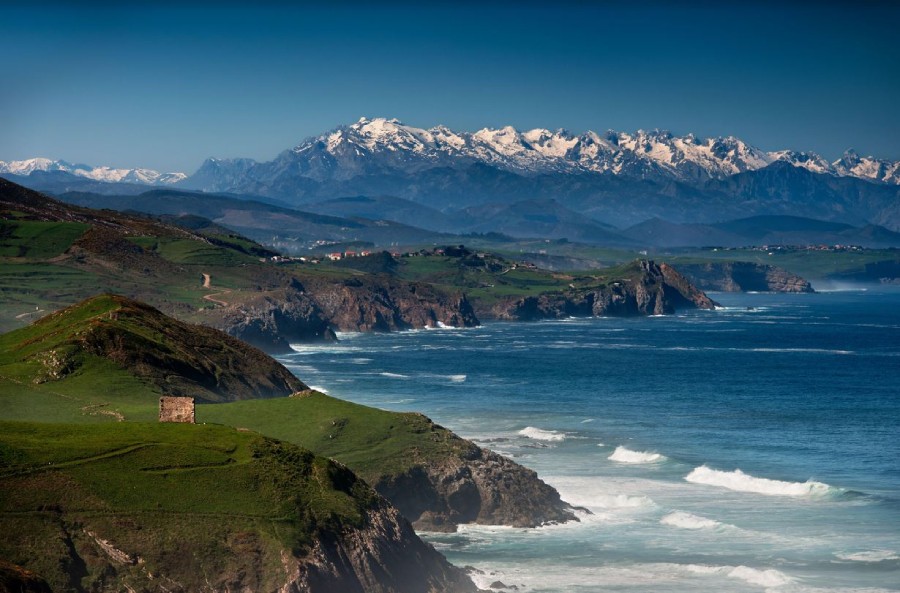



Yes, September is the grape harvest month. Yes, grapes are also harvested in Green Spain, excellent wine is made and, what is more, in beautiful villages. Yes, we have selected four of these towns so that you can make your own tour in stages. Yes, you will travel along the Cantabrian coast from east to west (or vice versa), watching how a small army of grape harvesters take the first and essential step in turning grapes into wine.
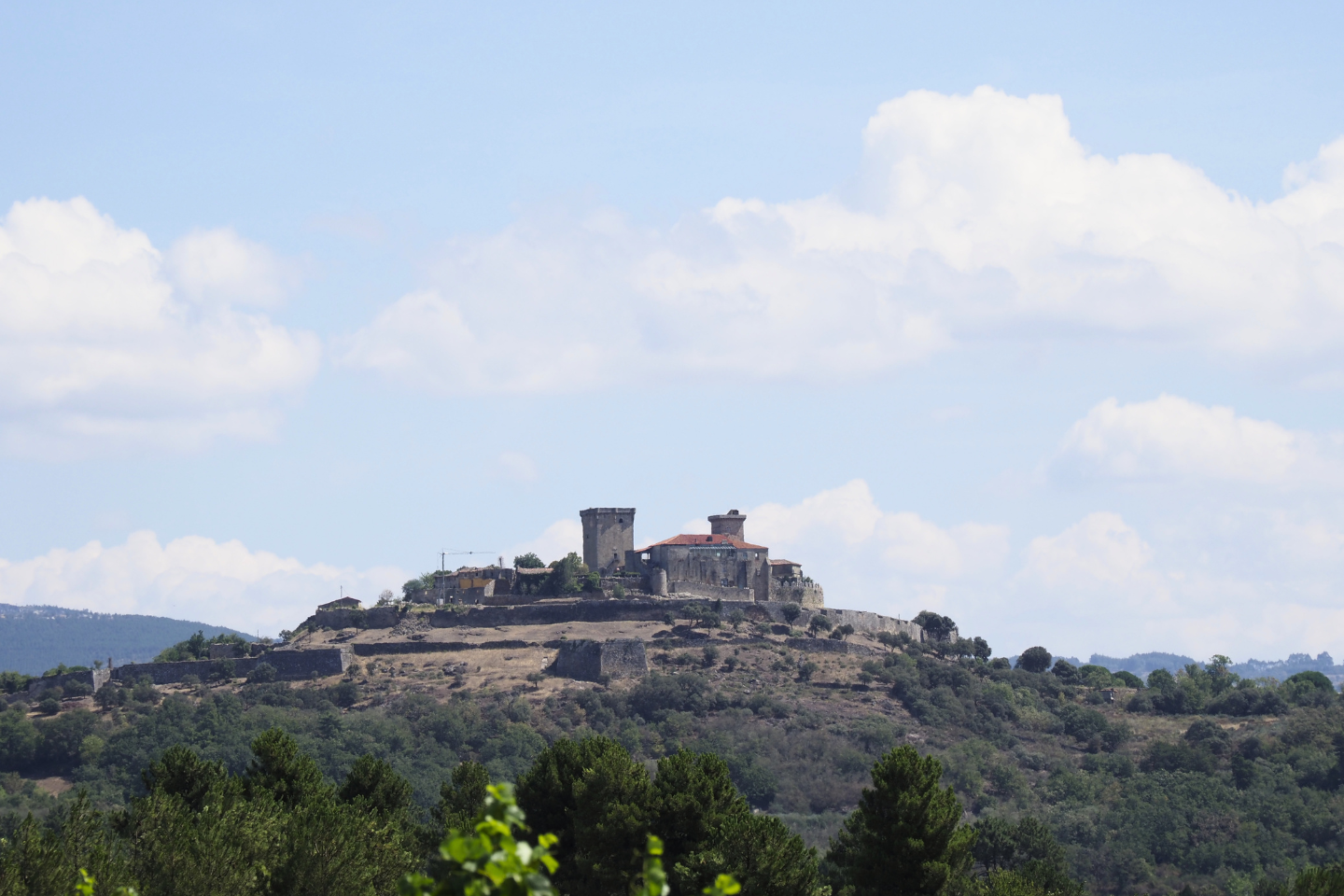
Monterrei. Monterrei Protected Designation of Origin. Ourense, Galicia
Where is Monterrei?
Monterrei is a small municipality located in the south of the province of Ourense, in the valley formed by the Támega River, the only Galician tributary of the Douro River. It is located in the southeast of the province, very close to the Portuguese border and almost next to the town of Verín. Its privileged location meant that it was the only natural passage towards the Raia Seca, the border with Portugal, so called because the separation is over land, without rivers.
What can you see in Monterrei?
The main attraction is the one you will see rising at the top of the hill, the imposing Monterrei Castle, built in the 13th century and considered the largest acropolis (and one of the best preserved) in Galicia. The fortress is a miniature city with a Romanesque church, noble towers, a palace… The complex remained in ‘operation’ until, practically, the day before yesterday, when it fell into French hands during the Peninsular War. The views from the top over the Támega valley are, needless to say, impressive. In neighbouring Verín, it is a real pleasure to stroll through the streets of its historic quarter until you come across García Barbón Square or, on the other side of the river, the Chapel of San Lázaro.
What can you drink in Monterrei?
The answer could be no other: wine from the Monterrei P.D.O., one of Galicia’s five wine Designations of Origin, created in 1994. The complexity of the production area, with several subzones, different types of soil and climates, means that these are very lively, complex and distinctive wines. A real pleasure for non-conformist wine lovers.
What wine and food experience should you enjoy in Monterrei?
Visit one of the 25 wineries in the area to experience and learn about the winemaking process. How? By walking through the vineyards, touching the vines and, if it is grape harvest season, taking part in the entire process. After bending your back and getting your hands dirty, the wine always seems to taste much better. Of course, a tasting of the best wines from the region will never be missing. By the way, one final fact: in the kitchens of the Verín region, grilled meat platters are something of an institution.
Artziniega. Arabako Txakolina Protected Designation of Origin. Álava
Where is Artziniega?
Artziniega is located at the northwestern edge of the province of Álava, bordering Burgos and Biscay. It is a picturesque municipality nestled in the Ayala Valley, and is part of the Aiaraldea region, located just 20 kilometres from Bilbao and 35 from Vitoria-Gasteiz.
What can you see in Artziniega?
Artziniega is a charming medieval town founded in the 13th century, declared a Monumental Site in 1995 and with a curious layout: an almond-shaped cluster of medieval buildings connected by three narrow parallel streets: Goeinkale (Upper Street), Artekale (Middle Street) and Barrenkale (Lower Street). It is simply a matter of setting off on foot and coming across its main monuments: the noble towers (such as the Ortiz de Molinillo de Velasco Tower or the Bengoa Tower) or, on the outskirts, the popular Sanctuary of Our Lady of La Encina, patron saint of Artziniega and Álava, the municipality’s main monument.
What can you drink in Artziniega?
The king here is the txakoli from the Arabako Txakolina Protected Designation of Origin (Txakoli de Álava), whose production area surrounds Artziniega itself and the towns of Amurrio, Llodio, Okondo and Aiara, all in the province of Álava. Txakoli is a typically Basque wine, very popular in its coastal production areas and increasingly well known for its inland vintages. It is a pale yellow wine, light and fruity, with a touch of acidity and a gentle sparkle.
What wine and food experience should you enjoy in Artziniega?
How about following the Aiaraldea Txakoli Route, which pairs wine, culture and gastronomy and allows you to discover the region’s wineries together with complementary cultural and gastronomic activities? In September, in addition to the usual markets selling local products held in the neighbouring towns of Amurrio and Llodio, there is also Artziniega’s Old-Time Market (on 19 September), a time tunnel that takes you back to the Middle Ages.
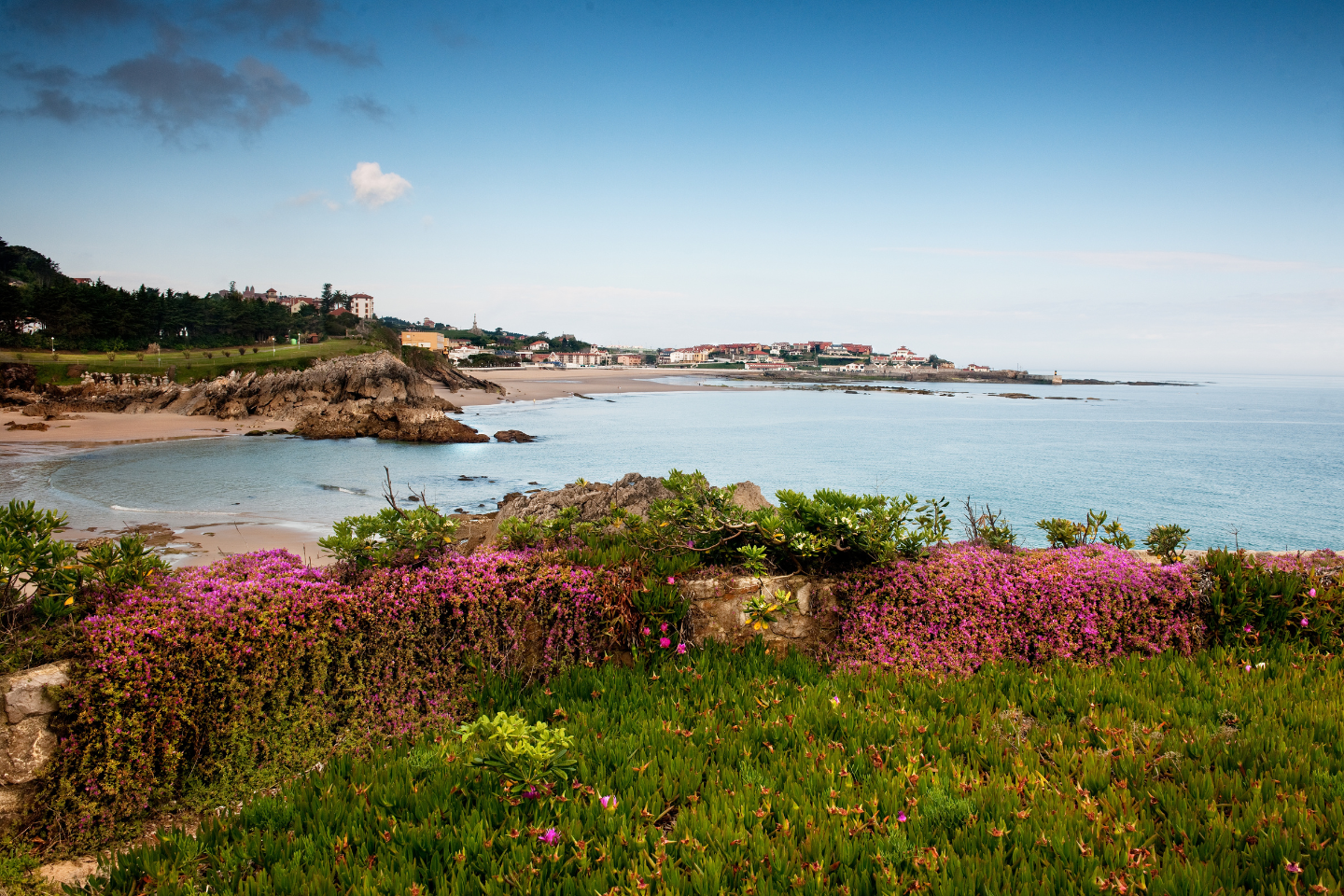
Comillas. Costa de Cantabria Vino de la Tierra P.G.I. Cantabria
Where is Comillas?
Comillas is a distinctive coastal and seaside town with a historic quarter and spectacular Neo-Gothic and Modernist monuments. It is located in the western part of the Cantabrian coast, just over 50 kilometres from Santander and very close to the popular Santillana del Mar.
What can you see in Comillas?
The town’s great attraction is the number and quality of the Modernist and Neo-Gothic monuments scattered throughout the town, as if they were part of the set of a fantasy film. But do not be fooled: they are absolutely real. Sobrellano Palace, the Pontifical University on the hill, the house of the Duke of Almodóvar del Río, Gaudí’s El Capricho, the cemetery watched over by the statue of the Exterminating Angel… it is hard to believe that so many monuments can fit into such a small space.
What can you drink in Comillas?
One of the wines from the Costa de Cantabria Vino de la Tierra Protected Geographical Indication, a label applied to wines whose grapes ripen between the coast and the inland valleys influenced by the Atlantic, the area in which Comillas is located. These are mainly young white wines, clean and bright in appearance, fruity and very fresh. They are ideal for accompanying fish and seafood dishes, which are never in short supply in this part of Cantabria.
What wine and food experience should you enjoy in Comillas?
What better way to enjoy a complete wine and food experience than by walking among the vineyards, tasting the wines or pairing them with a tasting menu. If this experience feels too short, it is possible to stay in rural accommodation close to the vineyards and wineries and experience, hour by hour, every stage of the grape harvest.
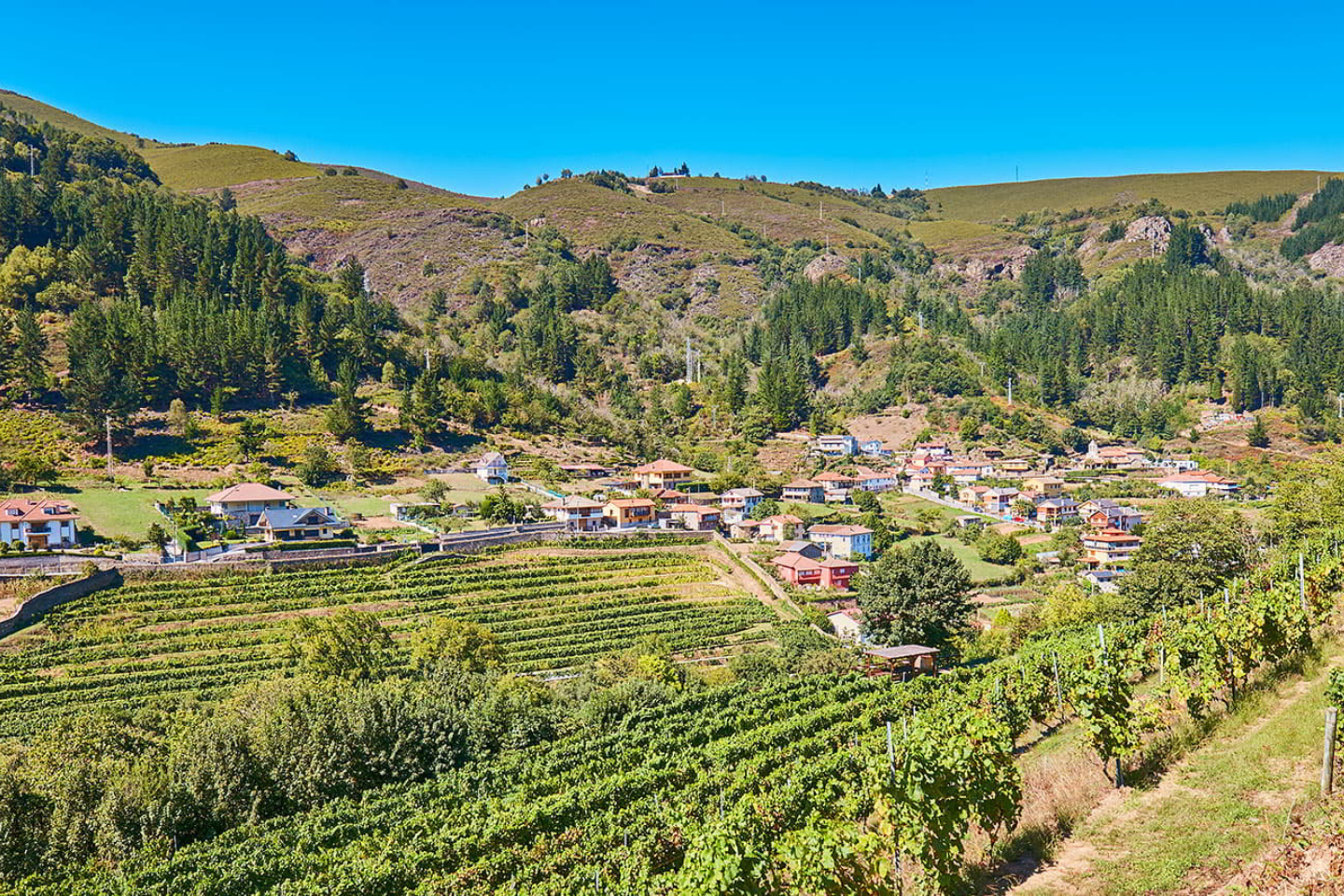
Cangas de Narcea. Cangas Protected Designation of Origin. Asturias
Where is Cangas de Narcea?
Cangas del Narcea is located in the southwest of Asturias, in the heart of the Principality, at the confluence of the Narcea and Naviego rivers. An interesting fact: Cangas is the largest municipality by area in Asturias and one of the largest in Spain.
What can you see in Cangas de Narcea?
Its historic quarter, of course, which is easy to explore on foot (the size of the town bears no relation to that of the municipality), in search of monuments such as the palaces of the Counts of Toreno, Omaña, or Uría, the Baroque Basilica of Santa María Magdalena (and framing the photo from the pedestrian footbridge) or the emblematic Roman bridge (which, in fact, is medieval) in the Entrambasauguas neighbourhood. To reach the Monastery of San Juan Bautista de Corias, known as ‘The Asturian Escorial’, it is best to take the car and spend a good while discovering its altarpieces and other pieces of ornate Baroque art. An interesting fact: the Parador in the monastery is one of the most visited in all of Spain.
What can you drink in Cangas de Narcea?
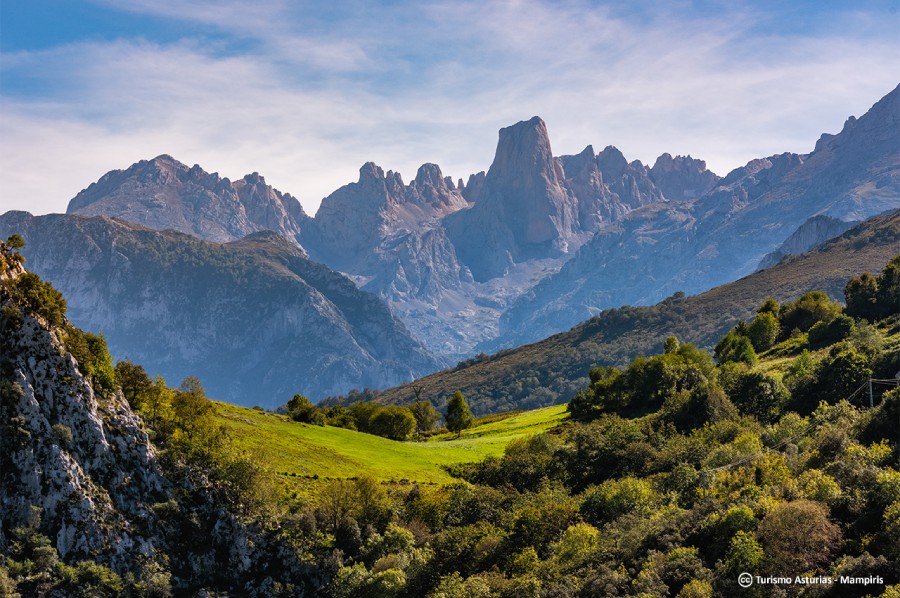
Do not be fooled by these landscapes, which may seem impossible for growing vines. Here, a great deal of very good wine is produced, with a noble title: Cangas Protected Designation of Origin. The favourable microclimate that prevails in the valley has allowed high-mountain vineyards to grow on its steep slopes since the Middle Ages, giving rise to a production of white and red wines that have become a benchmark in mountain winemaking.
What experience should you enjoy in Cangas de Narcea?
In addition to the usual activities of winery visits and tastings, in Cangas it is possible to enjoy the more cultural side of wine thanks to the Wine Museum and its extraordinary collection of information and instruments used in the valley for wine production over the centuries. In addition, Cangas del Narcea holds its Grape Harvest Festival every year, coinciding with the Pilar holiday weekend, a unique event as it is the only wine-growing area in Asturias, with mountain vineyards and medieval roots. For four days, the town fills with activity centred around wine: an artisan market, tastings, visits to the Wine Museum and parades by wine brotherhoods accompanied by the local band.