


What would our ancestors (whether they were Romans in Hispania or nineteenth-century gentlemen) say if we told them that mines, those once extremely harsh mines, would eventually become places where people would want to spend an enjoyable time? Those once-feared tunnels are now adapted galleries where visitors can appreciate and marvel at the work of those mining ancestors. Mines with 2,000 years of history; mines whose depths were melted down in gigantic furnaces; mines transformed into a welcoming refuge for wild animals from all five continents… In Green Spain, in the mining territories of Green Spain, anything is possible…
Cabárceno Nature Park. Cabárceno (Cantabria)
Which mining landscape would you recommend in Cantabria?
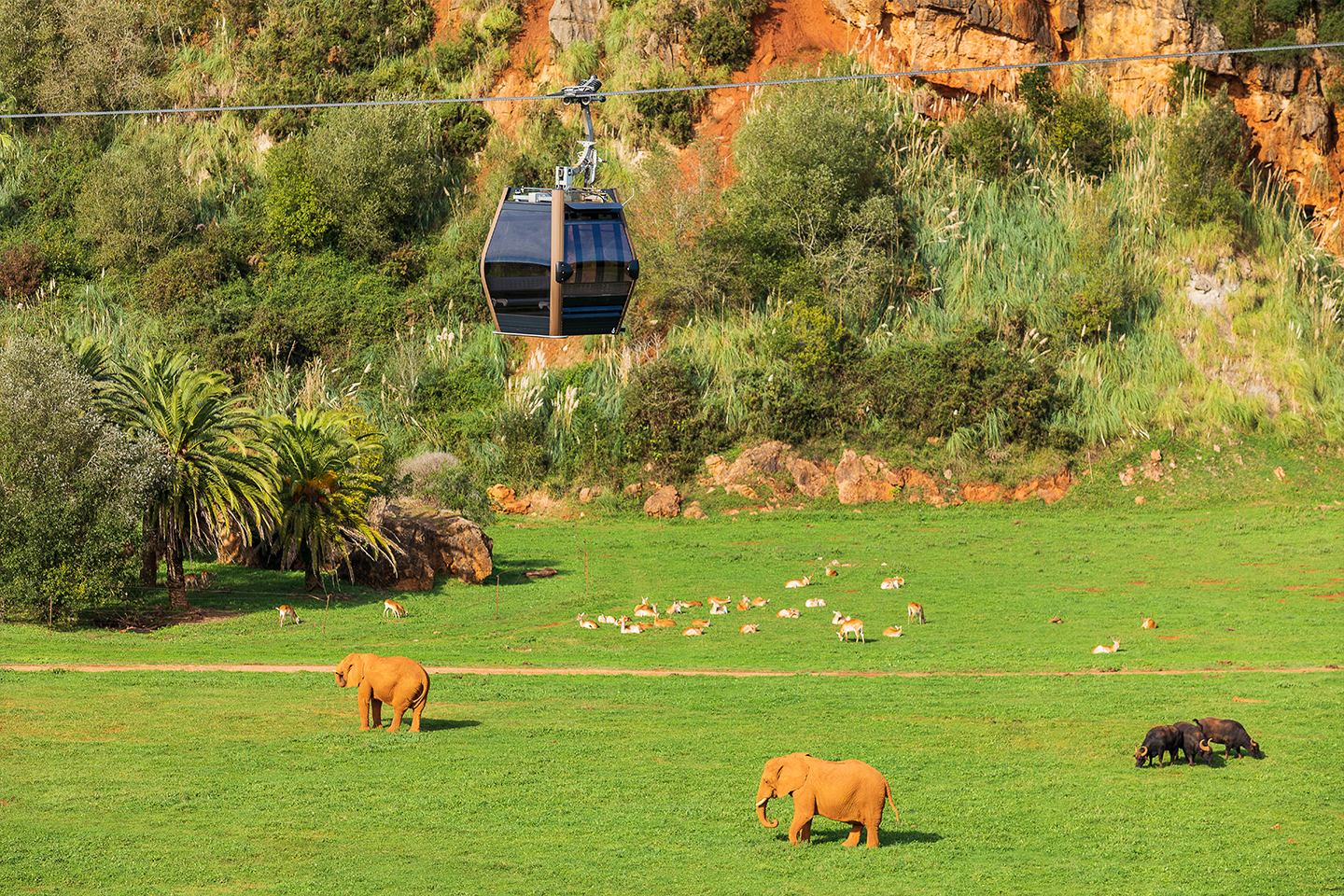
It is called Cabárceno Nature Park, but everyone refers to it affectionately, as if it were a loved one, and simply calls it ‘Cabárceno’. Do people go there to see a mining landscape? Not exactly, because Cabárceno is much more complex than that. It is a former iron mine of very distinctive beauty, but it also boasts another major attraction. It is a wildlife reserve unlike any other in Europe, both for its spectacular setting and its ‘inhabitants’: more than 1,000 animals belonging to 120 different species from all five continents. In other words, something like the park in the film ‘Jurassic Park’ (where dinosaurs roamed freely) but with animals from our own era.
What makes Cabárceno Nature Park special?
To begin with, mining did not leave behind a barren wasteland, but rather a remarkable labyrinth of limestone walls, reddish hills, gorges and lagoons which, thanks to the favourable climate of northern Spain, remains green all year round. Cabárceno is one of those places where human intervention combined with Nature has given rise to somewhere as unique as it is beautiful. The animals also live in large enclosures that make use of the spaces created by the miners through open-cast mining and recreate their natural habitats. Any other striking facts? The park boasts the largest reserve of brown bears in Europe.
What is the history behind the mining landscape of Cabárceno Nature Park?
A history that, unsurprisingly, began with the Romans and their extensive knowledge of (and need for) mining. For centuries, Cabárceno was a continuous source of iron until the twentieth century, when industrial extraction methods accelerated mining activity, which eventually ceased in the late 1980s. It was then that the dilemma arose (what to do with this devastated landscape) and, a few years later, a solution was devised: a nature park was born, which visitors can explore by car along a network of roads winding between the rock walls, with viewpoints from which herds of animals (bears, elephants and giraffes are just a tiny example of its great diversity) can be seen against the reddish backdrop of the terrain.
Arditurri Mines. Oiartzun, Gipuzkoa (Basque Country)
Which mining landscape would you recommend in the Basque Country?
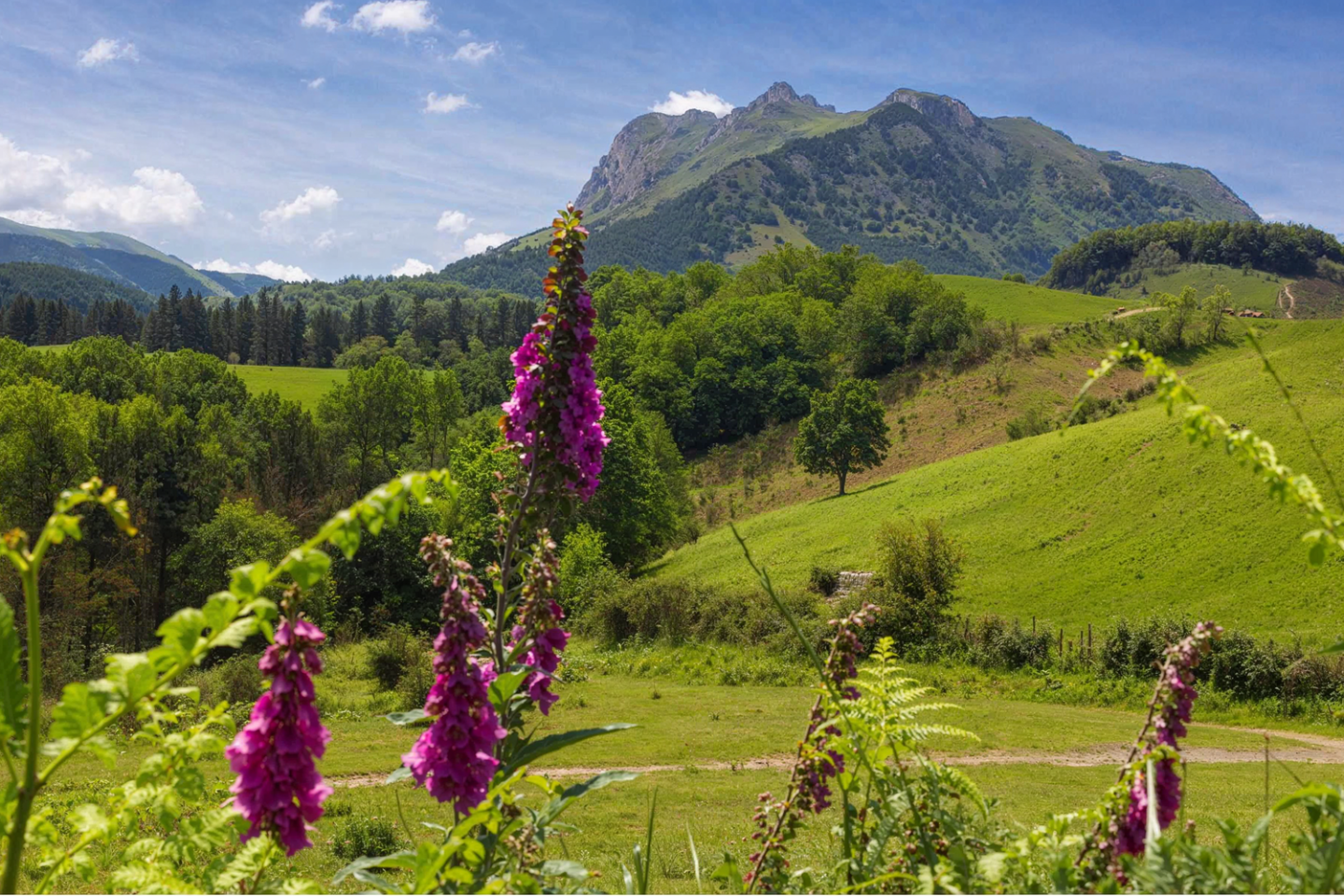
The Arditurri mining area, within Aiako Harria Natural Park, very close to Oiartzun, in the historic territory of Gipuzkoa. The Basque Country has a rich mining heritage and a long history associated with mineral extraction, but few places bring together everything that Arditurri offers in a single location: close contact with nature, a highly visible industrial legacy, a gallery open to visitors and, perhaps best of all, the opportunity to leave the car behind and reach the very entrance of the mine on foot or by bicycle.
What makes the Arditurri mines special?
Their age, the extraordinary engineering techniques used by those who worked them millennia ago and, very importantly, the mineral wealth they held, which allowed these mines to remain in operation for almost 2,000 years! They provided iron, lead, silver and fluorite, as well as work for those who mined them. Such an enormous amount of mineral extracted over so many years can only mean one thing: beneath the massive rocks of Peñas de Aia lies an entire underground city with, it is estimated, more than 15 kilometres of galleries excavated at different periods, in addition to the open-cast mines.
But, of course, after millennia of mining activity, what remains of that idyllic natural landscape? The magnificent Aiako Harria Natural Park, which is one of the geologically oldest ‘pieces’ of land in the Basque Country and the last mountainous outcrop of the Pyrenees before they disappear into the Cantabrian Sea. Exploring it on foot would be an excellent idea… and one that would deserve a couple of days.
What is the history behind Arditurri?
The usual story following the arrival of the Romans in these lands, but with one exception: here they did not build large recreational structures such as amphitheatres or colosseums. Instead, they devoted all their efforts to digging and extracting as much mineral as possible from the rich Arditurri mines, before shipping it from the port of Oiasso, on the land where the city of Irun now stands. The Romans worked as hard as they usually did: in fact, complex drainage systems have been documented in the Roman galleries, confirming just how ambitious and technically skilled those ‘crazy Romans’ were.
After the descendants of Rome, mining continued right up to modern times, reaching its peak production during the industrial era, thanks to the construction of a mining railway that enabled large quantities of material to be transported quickly through the port of Pasaia. Mining operations were closed in 1984, but their legacy lives on, not only through the facilities themselves and the Interpretation Centre, but also through the Arditurri Greenway, which follows the route of the old mining railway to cross, with hardly any changes in elevation, the pleasant plain where Oiartzun is located and which stretches out in front of Peñas de Aia.
Valle de Samuño Mining Ecomuseum, Langreo (Asturias)
Which mining landscape would you recommend in Asturias?
Let us travel to the Samuño Valley, in Langreo, a small, welcoming valley in the Nalón region where the two great realities of Asturias’ past come together: on the one hand, its rural side and, on the other, its industrial mining heritage. The contrast is striking: forests, rivers and vegetable gardens coexist here with mine entrances, railway cuttings and industrial buildings.
This is the landscape that has now become the Valle de Samuño Mining Ecomuseum, which presents this heritage as a unique space, with remains scattered throughout a protected natural environment.
What makes the Valle de Samuño Mining Ecomuseum special?
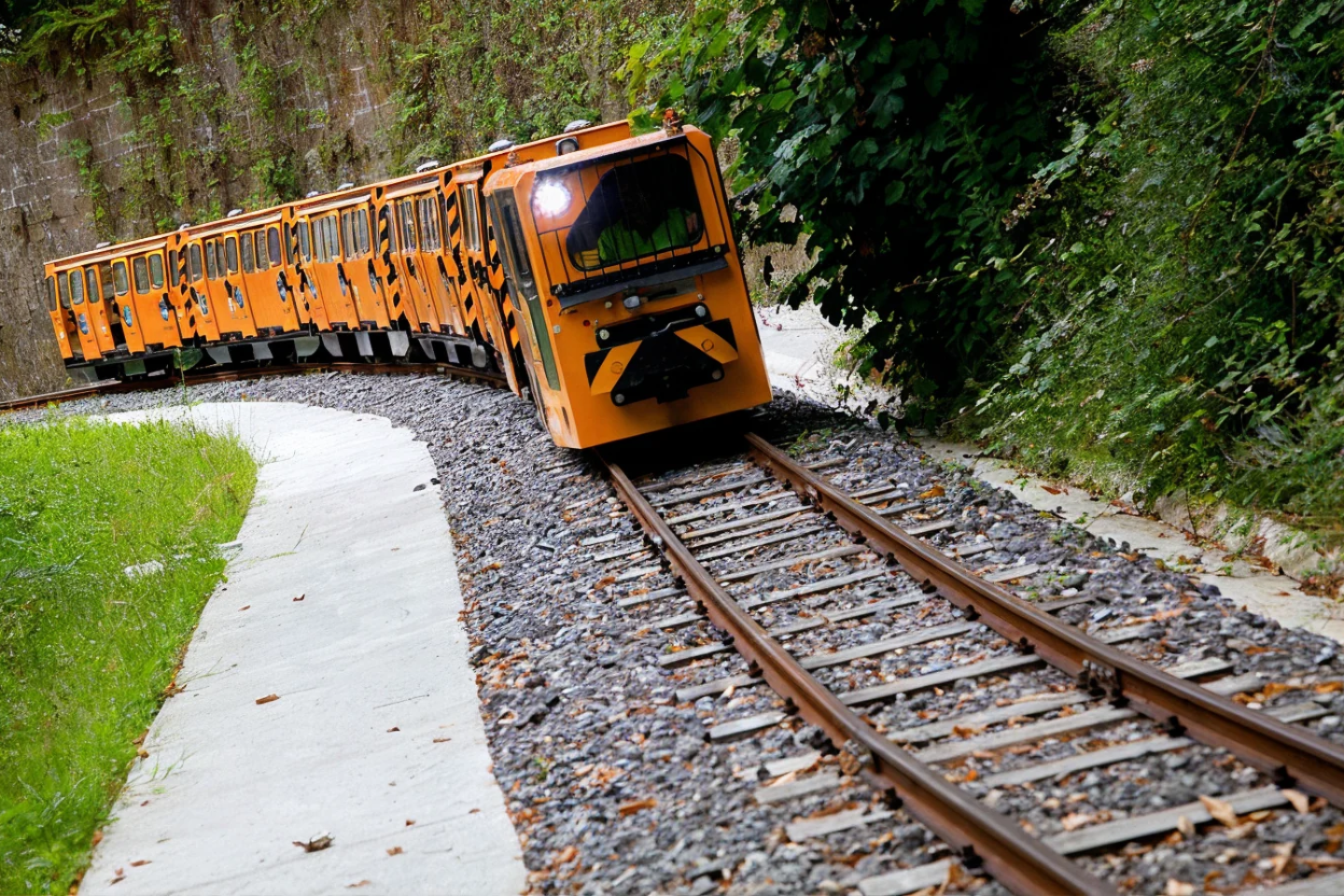
Isn’t the opportunity to climb aboard its authentic mining train special enough? One of the highlights of the revival of these mining landscapes was the restoration of the old railway cutting along which the train transported minerals from the mines of upper Samuño to the Nalón Valley. The journey, covering approximately two kilometres and lasting around twenty minutes, climbs through the narrow valley of the Samuño River, following the route in the opposite direction to the coal-laden wagons that once descended from the mine shaft. The experience of discovering the industrial traces of this deeply human-shaped natural landscape begins at El Cadavíu station, where the train departs along the old railway line and enters the Socavón Emilia, an authentic gallery used during the era of mountain mining. What will we find there? Exactly what chronicles, books and films have described: echoes, dripping water, dampness, darkness and the atmosphere of a mining gallery that penetrates one kilometre underground. This tunnel connects directly to the first level of the San Luis Mine Shaft, 32 metres below ground, where the intrepid passengers disembark.
The ascent from this first level is made in the shaft cage, a reproduction of the old lift used by miners to reach their working areas. It is upon reaching the surface that the great surprise of the visit appears: the mine yard, an exceptional industrial complex where all the former facilities come into view: the Engine House, the Headframe, the Washhouse and the Lamp Room, several historic locomotives associated with coal transport and, of course, the Interpretation Centre of the Protected Landscape of the Mining Basins, which helps visitors understand this fascinating relationship between industry and nature.
What is the history behind the Valle de Samuño Mining Ecomuseum?
On the one hand, there is the purely mining history, which we will address in the following paragraph. On the other, there is the human story of the people who fought to bring this project to life more than twenty years ago: it was the valley’s own residents who promoted the initiative to ensure that its mining history would not be forgotten and, at the same time, to revitalise tourism in an area that had suffered following the closure of the mines.
Unlike the other mines featured in this article (which had been worked for several centuries), this Asturian mineral deposit has a much more recent history. Before the coal boom arrived, the Samuño Valley, in Langreo, depended on livestock farming and agriculture. But in the late nineteenth century, companies such as Duro Felguera, Carbones Asturianos and Carbones de La Nueva transformed it into an ideal territory for coal extraction. Initially, they worked the coal seams from the hillsides by excavating galleries, and between 1920 and 1950 the two large vertical shafts were built: San Luis and Samuño. This ‘coming of age’ led to the creation of as many as four railway lines (to transport minerals, miners and goods) and the construction of an entire mining settlement (La Nueva), with housing, a company store and schools for the workers.
A Pontenova, Lugo (Galicia)
Which mining landscape would you recommend in Galicia?
A Pontenova, in the province of Lugo, and more specifically the so-called Ruta das Minas (Mines Route). This is an 11.8-kilometre circular trail that combines mining history with natural beauty, taking visitors from mine galleries to villages and sacred places. This route brings together in a single journey everything a true mining enthusiast could dream of: furnaces, mines, old railway stations…
What makes A Pontenova special?
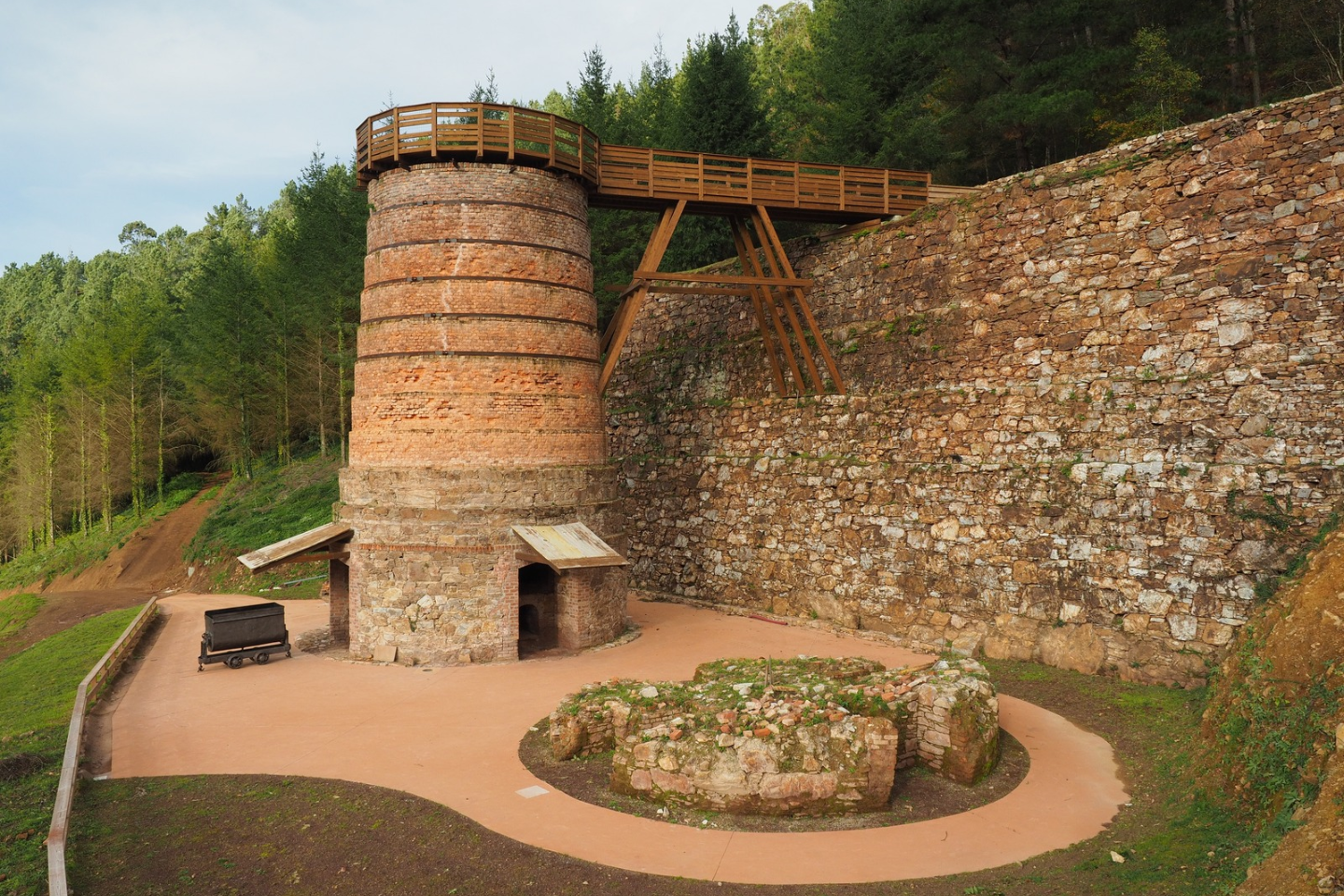
Its most striking and most ‘Instagrammable’ feature is undoubtedly its five large calcination furnaces, known as ‘fornos’, standing 11 metres high and measuring 4 metres in diameter, set into a hillside like the pipes of an organ. They form one of the largest groups of calcination furnaces on the Iberian Peninsula. The square surrounding them is now a recreational area and viewpoint, offering panoramic views of the Eo Valley and the mountains that once housed the mines. The furnaces were built between 1902 and 1925, and their purpose was to heat iron ore to high temperatures in order to remove phosphorous waste, which was subsequently used as fertiliser.
Is there more? Much more: the Consuelo Mine, the only mining gallery in Galicia currently open to the public; the 330-metre zip line (at a height of 80 metres), which follows the same route as the old cableway that transported iron to the smelting area. And, of course, there is also the 12-kilometre Eo Greenway, which follows the former railway line connecting the Vilaoudriz mines with the loading dock at Porto Estreito, at the entrance to the Ribadeo estuary. Ideal for walkers and cyclists.
What is the history behind A Pontenova?
A story almost identical to those already described in the other mining areas of Green Spain, and to what happened throughout the rest of Europe. The industrial advances developed during the nineteenth century made large-scale mining operations possible in the following century: in this case, it was the Sociedad Minera de Vilaoudriz that organised a complete mineral extraction system, together with its initial processing in the battery of furnaces at Vilaoudriz.
To transport the mineral, the company built a loading dock and then a 34-kilometre railway line. Galician iron was shipped to various destinations across Europe, particularly Germany and Great Britain, but the lack of profitability that affected Spain’s major mining operations during the second half of the twentieth century also took its toll on A Pontenova: mining activity ceased in the 1950s due to the low profitability of the ore and competition from other deposits; the railway stopped operating in 1969 and the furnaces were left forgotten…