


It may not be possible to reach the very centre of the Earth from Green Spain… but we have to try. We have selected four caves in the North where you can take shelter, cool down and be amazed by the treasures hidden inside them. A word of warning: they are not decorated caves and do not contain cave art, but you will be surprised by the works that Nature and ‘helpers’ such as water are capable of creating.
Arrikrutz Cave. Gipuzkoa, Euskadi.
What geographical and mountainous features characterise the surroundings of Arrikrutz Cave?
The location could not be better, halfway between the town of Oñati, with its Renaissance treasures, and the ultra-modern Sanctuary of Aránzazu, right in the heart of the karst system of Aizkorri-Aratz Natural Park. The cave is hidden in one of the folds of the Aizkorri mountain range, the great wall that separates the rugged landscape of Gipuzkoa from the plains of Álava. A geographical curiosity: Arrikrutz is located practically at the point where the three Basque provinces meet.
What makes Arrikrutz Cave special?
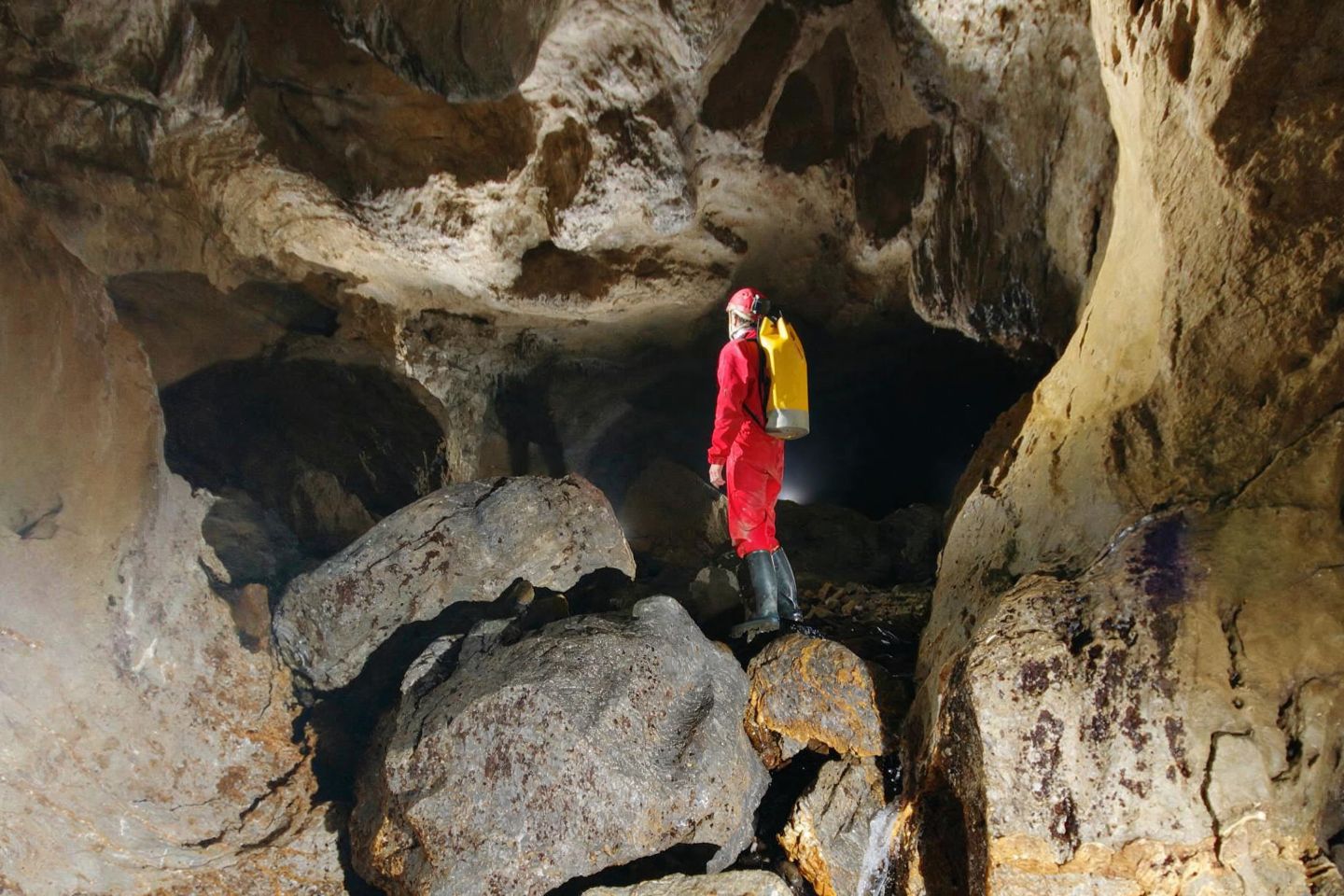
It forms part of the Gesaltza-Arrikrutz karst system, which comprises more than 15 kilometres of interconnected underground galleries, the largest in the whole of Gipuzkoa, but you can rest easy: there is no need to explore all of them. The visit lasts 60 minutes and reveals Gallery 53 by means of a floating walkway with dynamic lighting, showcasing an underground river and enormous stalactites. We are talking about a space formed more than 100 million years ago.
Tell me an interesting fact about Arrikrutz Cave!
The undisputed king of Arrikrutz is the cave lion, or rather its remains, the first and most complete specimen of its kind found anywhere on the Iberian Peninsula. The animal grew to more than one metre in height, weighed over 250 kilograms and was discovered in the cave in the 1960s, half a century after the first explorations began. Its scientific name is Panthera Leo Spelaea and it inhabited these landscapes during the Late Pleistocene.
What do you recommend doing after visiting it?
Before returning to the main road, do not forget to visit the nearby cave and hermitage of Sandaili, or San Elías de Araotz, one of the most charming and magical places in Euskadi. When you reach the road connecting Oñati and Arantzazu, either direction will be a good choice: the sanctuary of the patron saint of Gipuzkoa was a daring architectural and artistic undertaking that did not even please the ecclesiastical authorities who commissioned it. Seventy years after its creation, time has proved Sáenz de Oiza and the Basque artists who joined the adventure, including Oteiza and Eduardo Chillida, right.
El Soplao Cave. Cantabria
What geographical and mountainous features characterise the surroundings of El Soplao Cave?
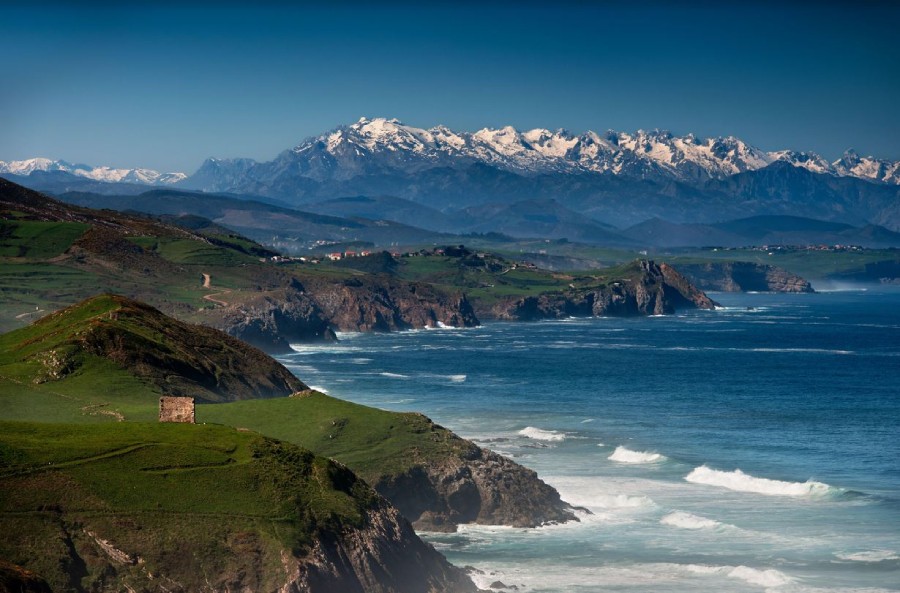
El Soplao is located in the Sierra de Arnero, between the municipalities of Herrerías, Valdáliga and Rionansa, at an altitude of 540 metres, in a former mining area. Despite being 20 kilometres from the coast and having a modest altitude, the Cantabrian Sea and beautiful neighbouring mountain formations such as the Picos de Europa, Peña Sagra and the Sierra del Cuera, already in Asturias, can be seen from the area surrounding the cave.
What makes El Soplao Cave special?
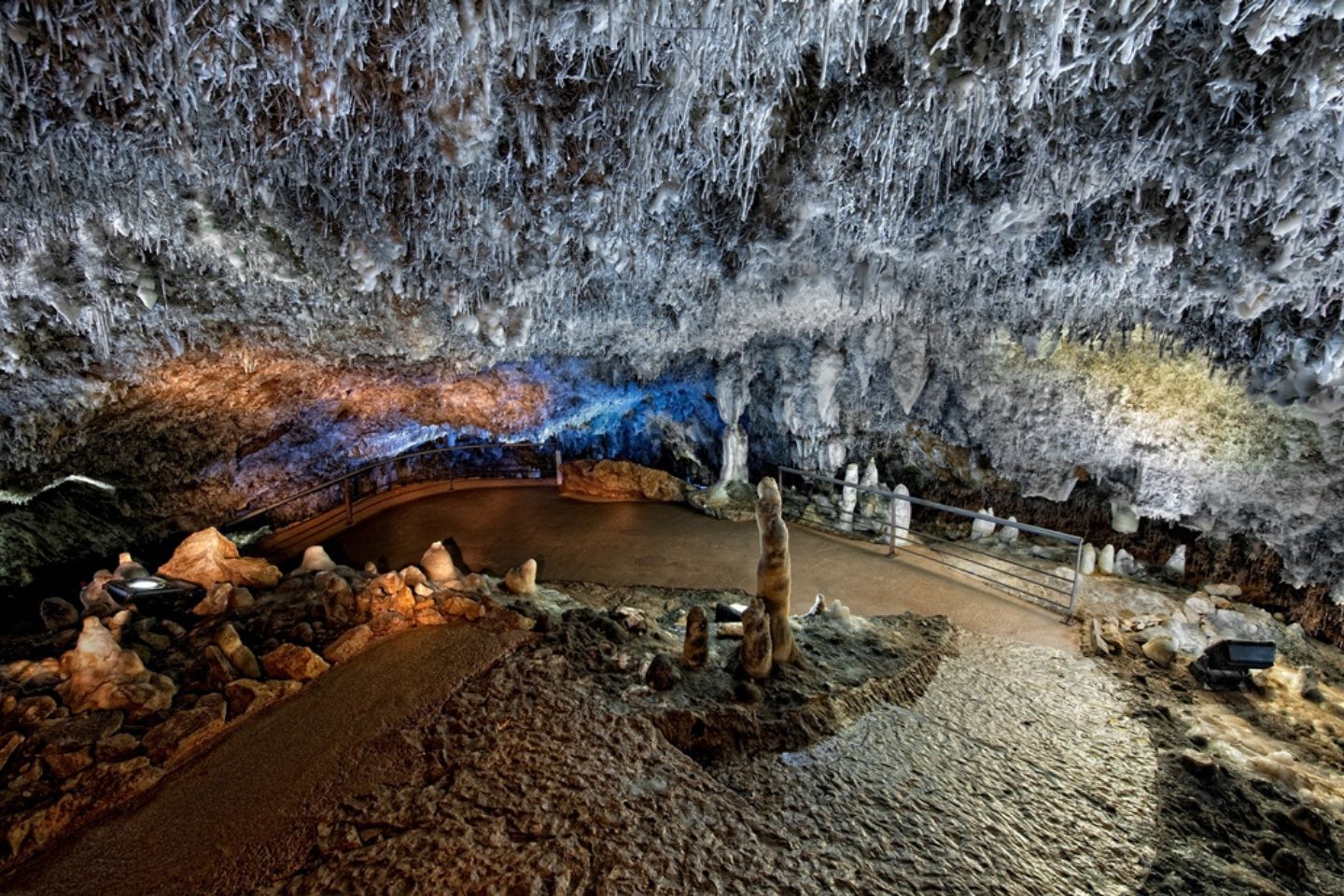
Everything is the work of a master craftsperson called ‘geology’, with the invaluable assistance of water and no human intervention. In fact, even while an army of miners battled inside these cavities day after day to extract zinc and lead from their depths, they decided to preserve what is now known as the ‘Sistine Chapel’ of underground geology. What are its most significant ‘works’? One of the world’s largest concentrations of helictites, calcareous formations that grow in seemingly impossible directions, defying gravity, with densities of up to 4,000 helictites per square metre in some areas.
Tell me an interesting fact about El Soplao Cave!
The same people who chose not to alter the cave were the ones who named it El Soplao. This was the name given to the current of air created when, during excavations through solid rock, they broke into an underground gallery. On this occasion, when they discovered this ‘Sistine Chapel’, the ‘soplao’ that cooled their faces came with an enormous surprise.
What do you recommend doing after visiting it?
It would be unusual to arrive anywhere in Cantabria and not have a wide range of attractive places within a radius of no more than 20 kilometres. Here, of course, this rule also applies. Would you like a coastal town where you can eat seafood or simply relax on the beach? San Vicente de la Barquera. An Indiano town featuring one of the few works by Antonio Gaudí built outside Catalonia? Comillas. A unique natural area? Oyambre Natural Park, located between the two towns.
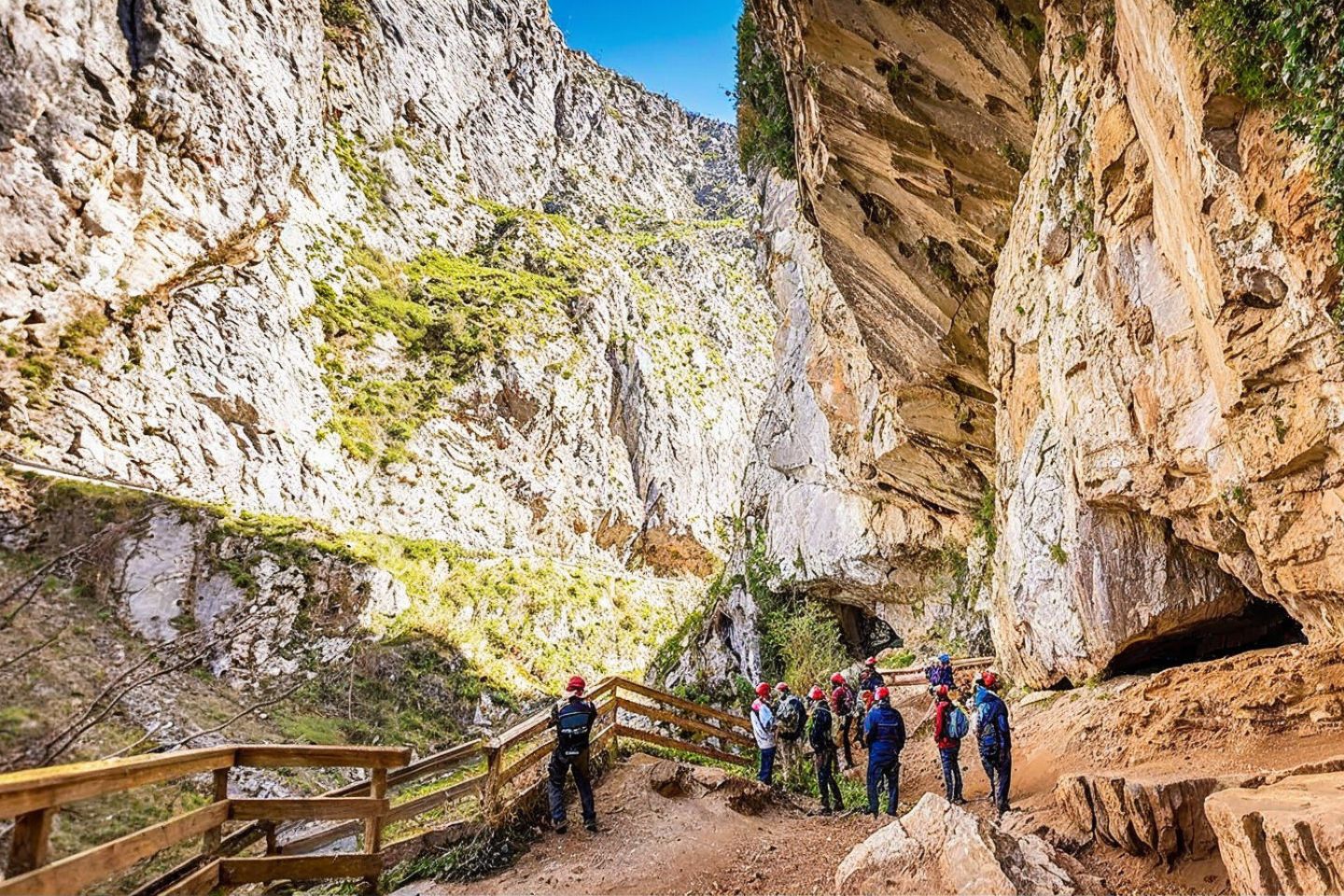
Huerta Cave. Teverga, Asturias.
What geographical and mountainous features characterise the surroundings of Huerta Cave?
It is located in the Foz de la Estrechura gorge, literally wedged between the Sierra de la Sobia and Peña Vigueras, within Las Ubiñas-La Mesa Natural Park, very close to the Teverga Prehistory Park. It is important to remember the words ‘gorge’, ‘narrowness’ and ‘wedged’, because they perfectly describe this landscape enclosed between great walls of Carboniferous limestone.
What makes Huerta Cave special?
With around 14.5 kilometres of galleries, it is the second-largest cave in Asturias. It acts as a sinkhole and underground channel for the River Sampedro, or Val de Sampedro, and is arranged across three levels: a permanently flooded lower level, an intermediate level and an upper level, the most accessible one, containing stalactites, stalagmites, columns and underground lakes. There are two types of visit and both must be undertaken with a guide. The first is the walkway visit, an itinerary lasting approximately 50 minutes that runs through the interior of the cave and is suitable for most visitors. The second option is a more demanding route that follows the course of the river and usually lasts between 2 and 3 hours.
Tell me an interesting fact about Huerta Cave!
Humans will not be the only ones moving around here. The cavern is home to the largest colony of common bent-wing bats, Miniopterus schreibersii, in Asturias and one of the most important in the north-western Iberian Peninsula; these specimens migrate up to 350 kilometres between different shelters.
What do you recommend doing after visiting it?
After the visit, should you feel like getting some fresh air, you can follow the Senda del Oso towards Proaza and Tuñón, or visit the Teverga Prehistory Park itself, just a few minutes from the cave.
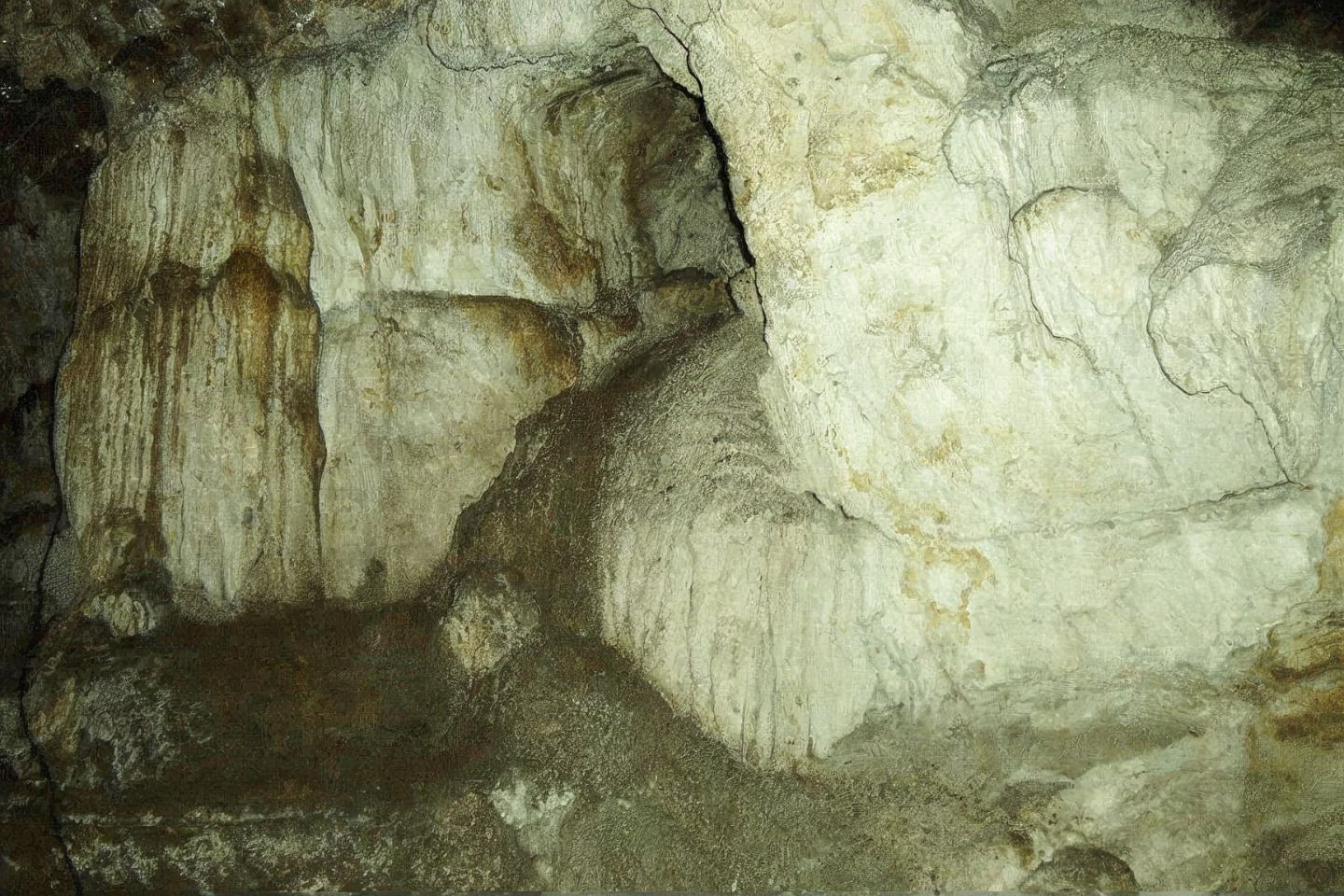
Cova do Rei Cintolo (Mondoñedo. Lugo. Galicia)
What geographical and mountainous features characterise the area surrounding Cova do Rei Cintolo?
It is located in Supena, in the parish of Argomoso, deep within the limestone interior of the lush Monte A Graña, beside the valley of the River Valiñadares, in the region of A Mariña Lucense, close to Mondoñedo and its spectacular cathedral, which we have already discussed on another occasion. Unlike the landscapes of Asturias, the contours here are gentle and the peaks less imposing: we are in a humid part of Galicia very close to the sea, where meadows are the norm.
What makes Cova do Rei Cintolo special?
It is the largest natural cave in Galicia, with more than 7,500 metres of galleries distributed across three main levels. It is karstic in origin and lies in terrain containing slate, which gives it a distinctive geological character. Inside, there are stalactites, stalagmites, columns, flowstones, a small lake and an underground current known as the River Celtas. Do we really need to reveal any more spoilers?
Tell me an interesting fact about Cova do Rei Cintolo!
It gives its name to a legendary Galician story: Rei Cintolo is said to have ruled the kingdom of Bría until a sorcerer, embittered by the love of his daughter Xila for a count, caused the entire kingdom to sink beneath the ground. Legend has it that, even today, on certain mornings, the princess can be seen at the entrance to the cave combing her golden hair as she waits for someone to break the spell. We cannot guarantee that getting up early to try your luck will be worthwhile.
What do you recommend doing after visiting it?
How about a plan involving stretching your legs? The Water Hiking Route connects the Mondoñedo neighbourhood of Os Muíños with the cave, passing through what some have called the ‘Venice of Mondoñedo’; you can also end the day by walking through Mondoñedo’s historic centre and visiting its cathedral. Anyone wishing to rest their eyes can visit the Argomoso viewpoint, a simple, idyllic and almost Zen-like spot where you can sit and contemplate the Galician horizon.