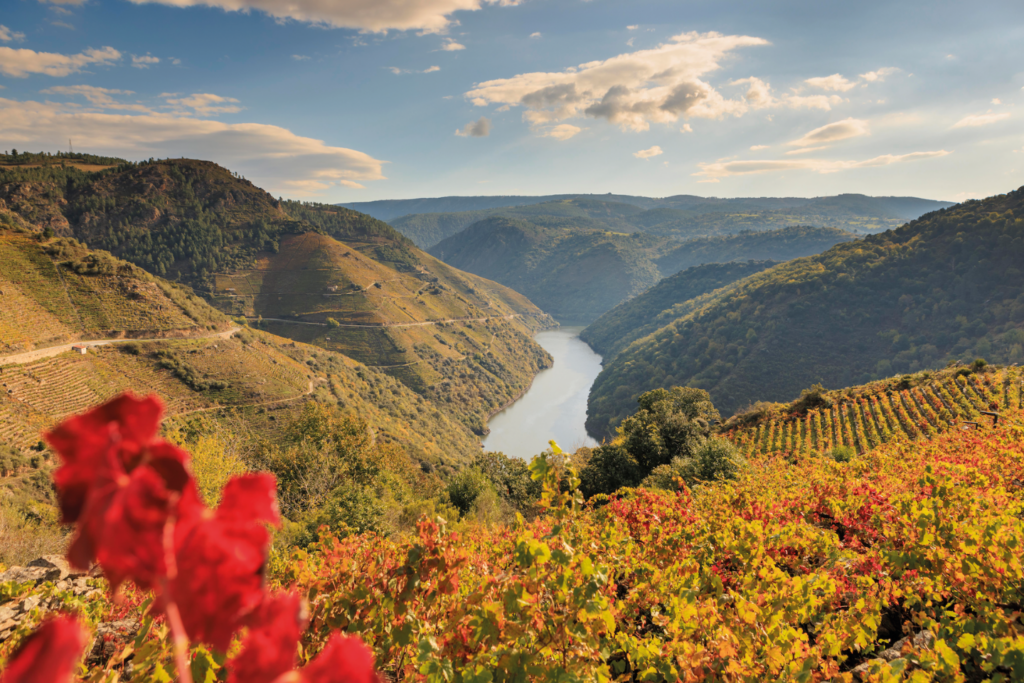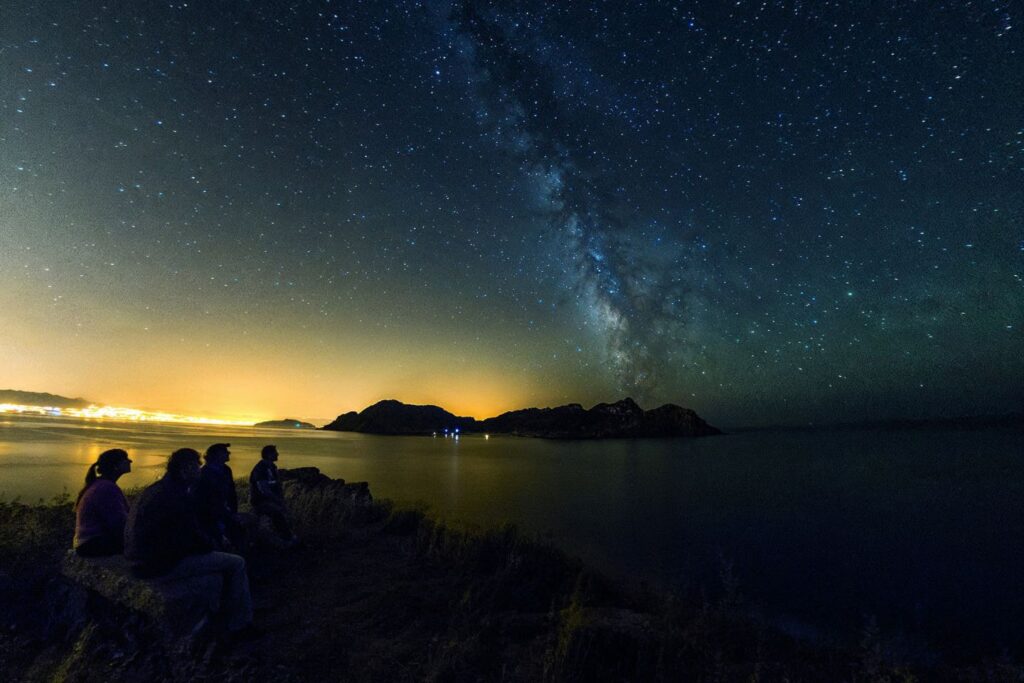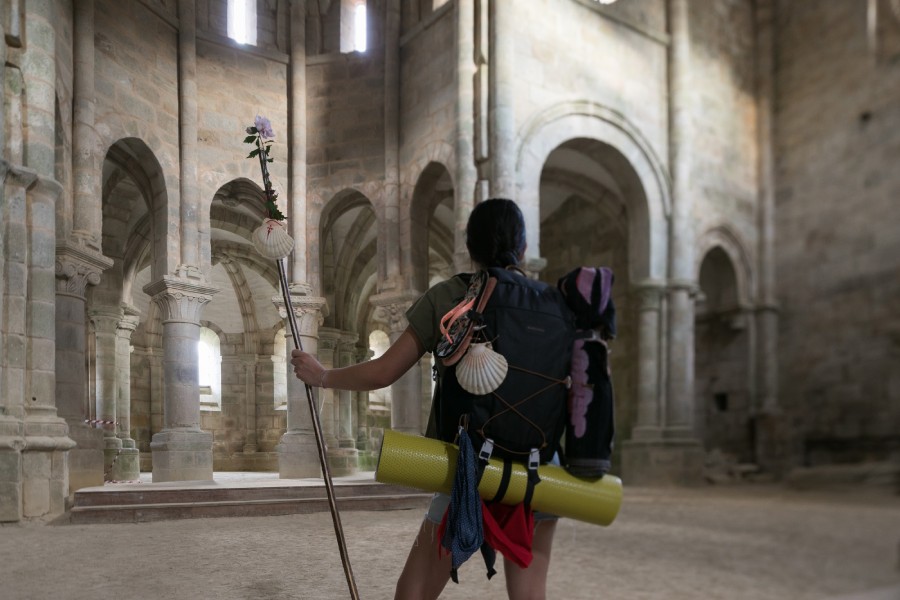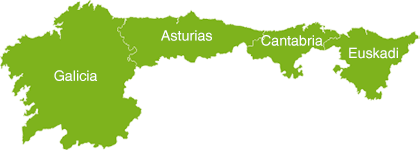



What powers does autumn have that make the forests of the Green Spain Ecotourism Reserve so beautiful? We have selected four ‘cities’ populated by trees, all radically different from one another, and four equally different ways to immerse yourself in them. A floating laurel forest surrounded by shellfish? We’ve got it. A chestnut grove that has fed its neighbours for decades? Come and see. Apple trees at the foot of imposing rocky walls? Help yourselves. A magnificent beech forest that changes colour with the arrival of the cold? At the back, on the right…
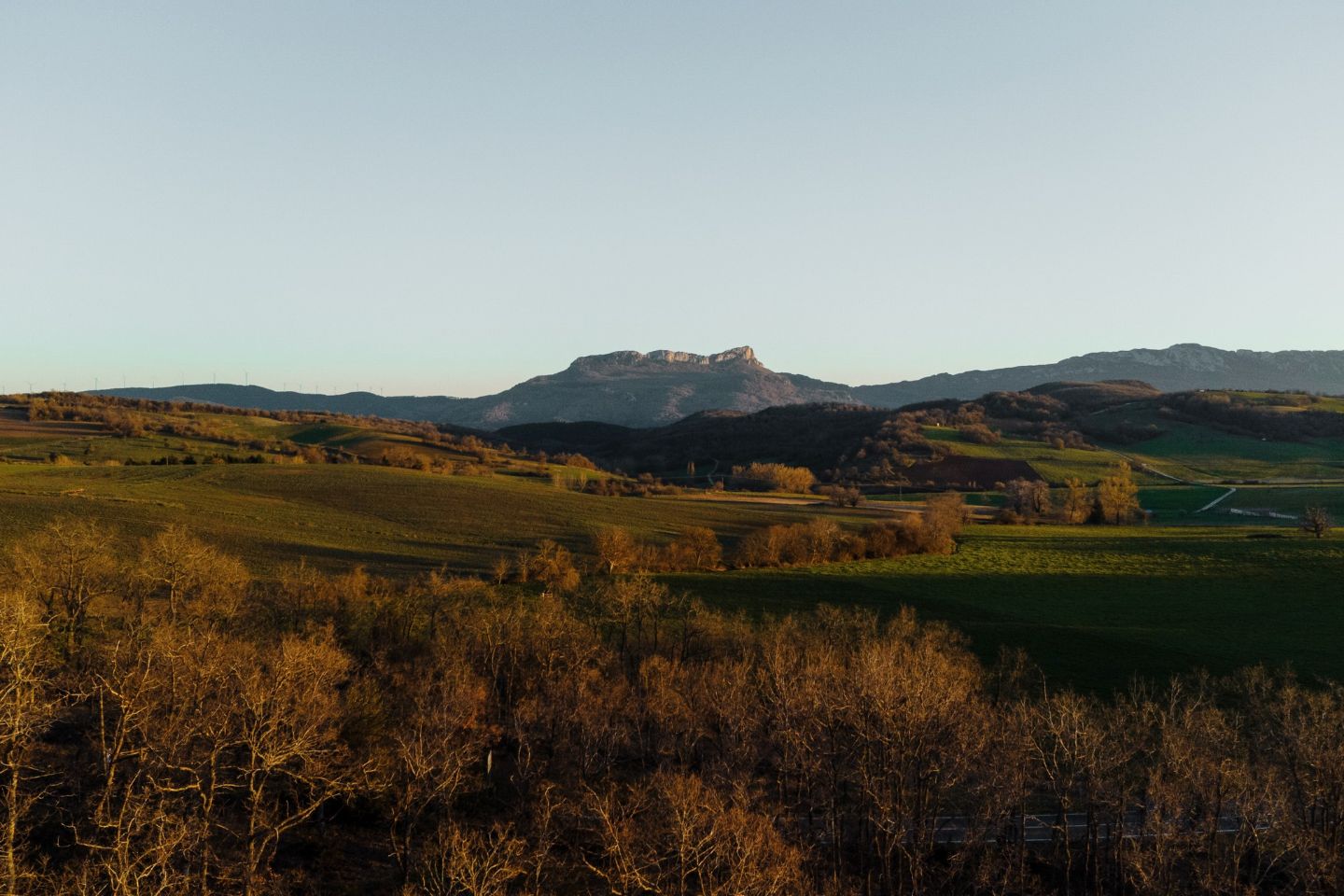
Chestnut trees of Apellániz/Apilaiz in Izki Natural Park. Álava/Araba (Basque Country)
Where are the chestnut trees of Apellániz/Apilaiz located?
It is located in the area known as Montaña Alavesa, which rises just south of its ‘sister’, the Llanada Alavesa (the great valley through which the N-I runs), and about 30 kilometres from the capital, Vitoria-Gasteiz. The forest of our dreams is, in this case, the chestnut grove of Apellániz/Apilaiz. It is located in the council of the same name, which belongs to the municipality of Arraia-Maeztu in Álava. The chestnut grove lies in the heart of Izki Natural Park, covers an area of 13 hectares and contains around 1,100 chestnut trees, a considerable number, especially when we bear in mind that Arraia-Maeztu has just over 800 inhabitants.
What is special about the chestnut trees of Apellániz/Apilaiz?
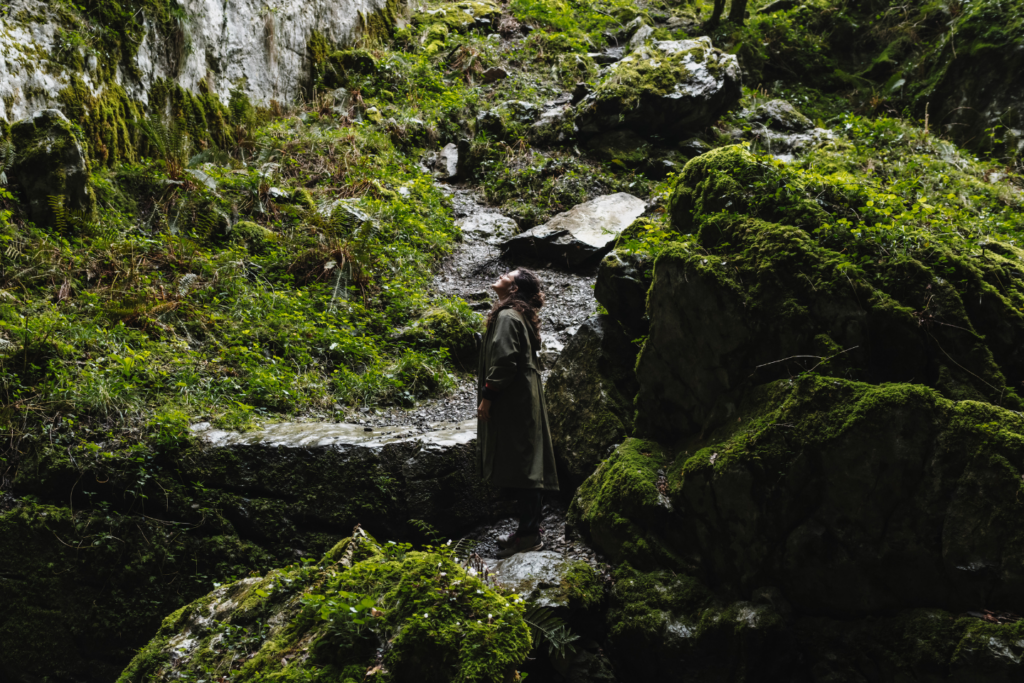
First of all, what all the tourist guides say: it is the largest and best-preserved chestnut forest in the Basque Country. Secondly: these are not simply trees, but a whole symbol of cultural and historical identity that has been deeply linked to this corner of the Basque Country for centuries. Did you know that each tree has an owner who makes use of it, looks after it and passes it down from generation to generation? Anything else? Of course. Nature has not been the only artist involved in this work, as human hands have ‘pollarded’ the trees to make better use of their wood and fruit. That is why the forest has such a romantic and ghostly appearance (and without even needing to visit it on a foggy day… although fog always helps to enhance its charm).
What is the best time to visit them? And the best experience to discover them?
Without a doubt, autumn. That is when the forest turns shades of ochre and copper, chestnuts cover the ground and the village celebrates its big event. Every year, in mid-October, Apellániz/Apilaiz organises the Chestnut Festival, with chestnut picking and tasting, as well as activities about conservation projects. How about an experience to discover ‘thousand-year-old’ chestnut trees in a place steeped in legends and, once there, plant, graft, prune or harvest? All the information, here.
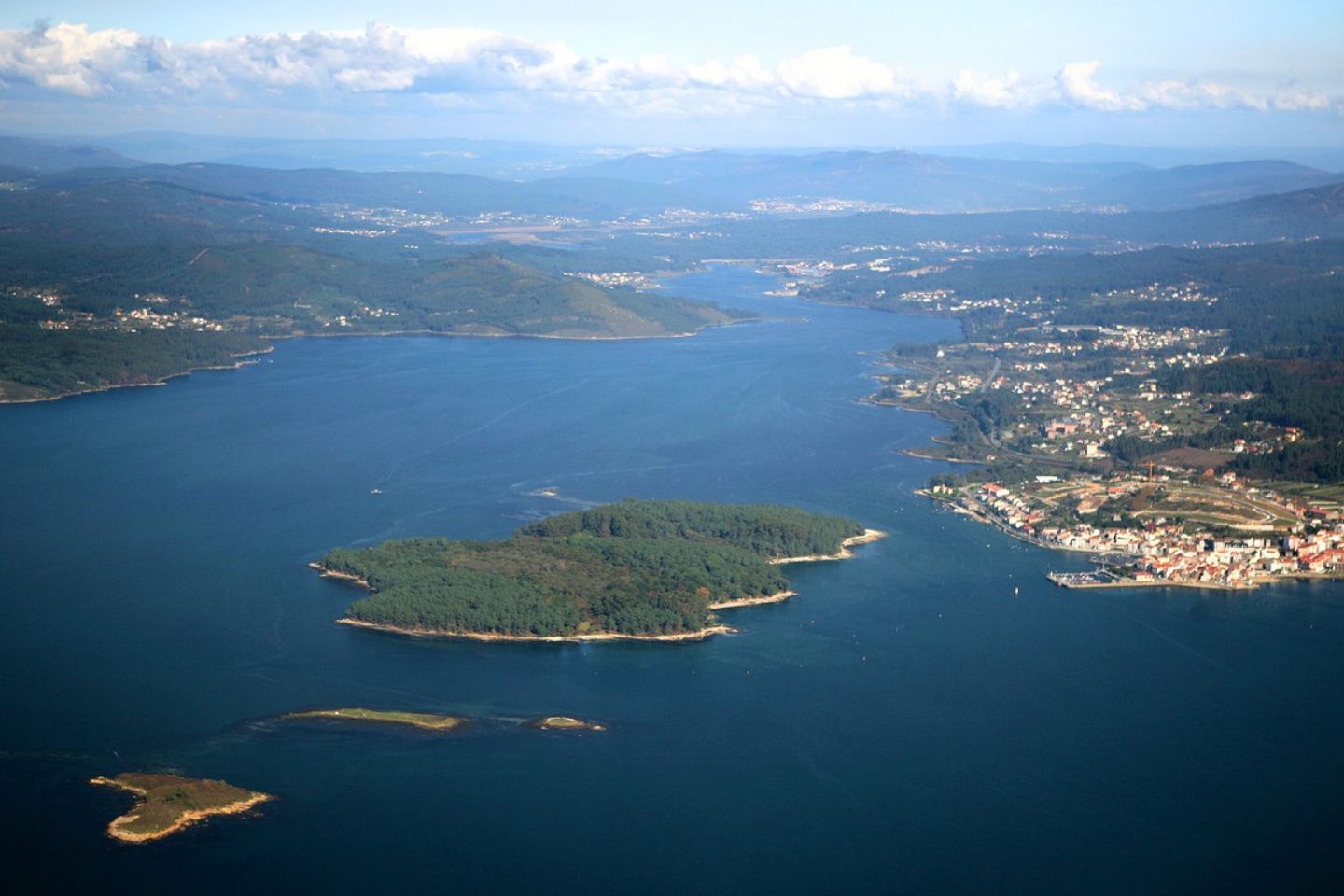
Laurel forests of Cortegada Island in the Atlantic Islands of Galicia Maritime-Terrestrial National Park (Galicia)
Where is Cortegada Island located?
Cortegada forms part, together with Sálvora, of the archipelagos of the Arousa estuary, in the Atlantic Islands of Galicia National Park, the only national park in Galicia and one of the twelve on the Iberian Peninsula. Cortegada is the inner archipelago of the estuary, unlike Sálvora, which lies in the outer area. In other words, Cortegada is sheltered from the fury of the Atlantic, which is why, throughout its very long history, it has been a highly coveted prize and, well into the 21st century, remains a historical and geographical rarity.
Cortegada is very close to the coast, directly opposite O Carril and very near Vilagarcía de Arousa, at the mouth of the River Ulla. This meeting of fresh and salt water has made the narrow channel separating the island from the mainland (barely 200 metres) a fertile stretch of sea for shellfish farming, especially cockles and clams, known as the Canal de los Viveros
What is special about Cortegada Island?
A remarkably eventful history considering its small size. Did you know that it was purchased through public subscription and given to Alfonso XIII so that he could spend his summers here? And that the monarch accepted the island but not the summer holidays (he went off to spend his Augusts at the Magdalena Palace in Santander), while his son Juan de Borbón sold it to a property developer years later? Fortunately, no housing development was ever built and, decades later, Cortegada returned to public ownership, although under strict protection. Cortegada is home to the largest laurel forest in Europe (which explains the island’s characteristic scent), with specimens reaching 13 metres in height, and it has more than a dozen endemic species, not to mention the old buildings of the community that once lived there and made a living from, among other activities, collecting seaweed.
What is the best time to visit Cortegada Island? And the best experience to discover it?
The correct answer would be any time of year because laurel is an evergreen shrub whose appearance hardly changes throughout the year. However, during the autumn months, the contrast between the green of the laurel and the rest of the vegetation (which does take on autumn colours) will provide plenty of perfect photographs for social media. It is important, however, to find out about the visiting arrangements or any permits required if you want to visit independently. Cortegada is a carefully protected treasure. Another thing to bear in mind is that visiting times depend largely on the tides… and that the rainfall patterns in this corner of Spain make waterproof clothing advisable. There is an experience that offers an interpretative visit to Cortegada, combining scientific rigour with a sensory approach. The guides use laboratory equipment and educational resources to explain the history of the former inhabitants, the oceanographic conditions, the shellfish farming areas of Carril and the natural, cultural and ethnographic heritage of the protected area.
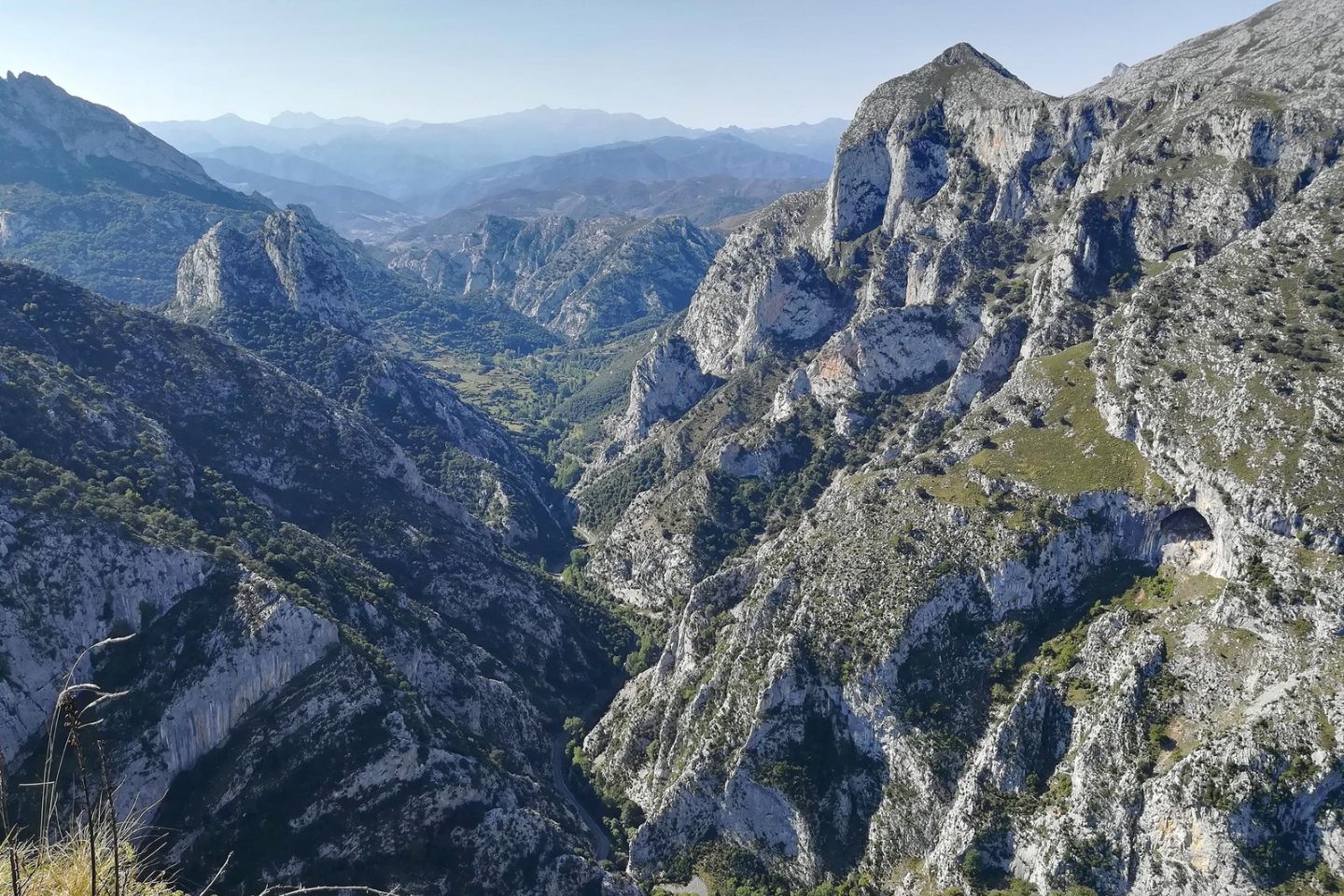
Meila apple tree forests in the Liébana Special Area of Conservation (Cantabria)
Where is the Liébana SAC located?
The SAC (Special Area of Conservation) of Liébana is in the Liébana region, in southwestern Cantabria. It covers the municipalities of Peñarrubia, Tresviso, Cillorigo de Liébana, Camaleño, Potes, Cabezón de Liébana, Vega de Liébana and Pesaguero. The area is part of the Natura 2000 Network and, very importantly, is integrated into the Picos de Europa National Park, which helps to expand an already generous range of landscapes (summits, high-altitude pastures, forests, rocky spires…).
What is special about the Liébana SAC and what are meilas?
Let’s be brief and concise: an astonishing variety of mountain ecosystems. You could say that everything you could ask for from the rocky heights of Green Spain can be found here. And that includes, of course, wildlife. Lots of it, and very varied. An essential part of Cantabria’s brown bear population lives here, along with emblematic birds such as the grey partridge, the middle spotted woodpecker, the recently reintroduced bearded vulture, and a population of Cantabrian capercaillie, the only and last one in Cantabria. And it is here, in this exuberant setting, that the curious meila, the wild apple of Liébana, will catch our attention. It is a small fruit with a sour and bitter taste. Meilares are the trees that produce them, and they have adapted perfectly to this environment: they can grow to a considerable size, thrive in the mountains and coexist perfectly with the other trees and shrubs around them. What purpose do meilas serve in such a wild environment? They help feed the wildlife mentioned above, such as brown bears, roe deer, red deer, wild boar, rodents, etc., and many birds; all of these, in turn, can help new meilares grow by carrying their seeds from one place to another.
What is the best time to visit the Liébana SAC? What experience would you recommend to enjoy it to the fullest?
If you have no experience in high mountains, late spring and summer are the safest times to discover (and walk through) the higher areas, always taking the appropriate precautions. If you lack experience and suitable equipment, the best option is to take advantage of the autumn months to explore the lower valleys and the extraordinary cultural heritage contained within the SAC. Needless to say, towards the end of the year it offers the greatest contrasts and, consequently, the greatest beauty, despite the risk of showers and fog. It is not just that the beech and oak forests dress themselves in impossible colours, but also that visitor numbers fall compared with summer, and this break from human presence is particularly good for the landscapes. It is in late summer and early autumn that the meilares shed their fruit, making it an ideal opportunity to enjoy this experience and immerse yourself in the world of these wild apple trees.
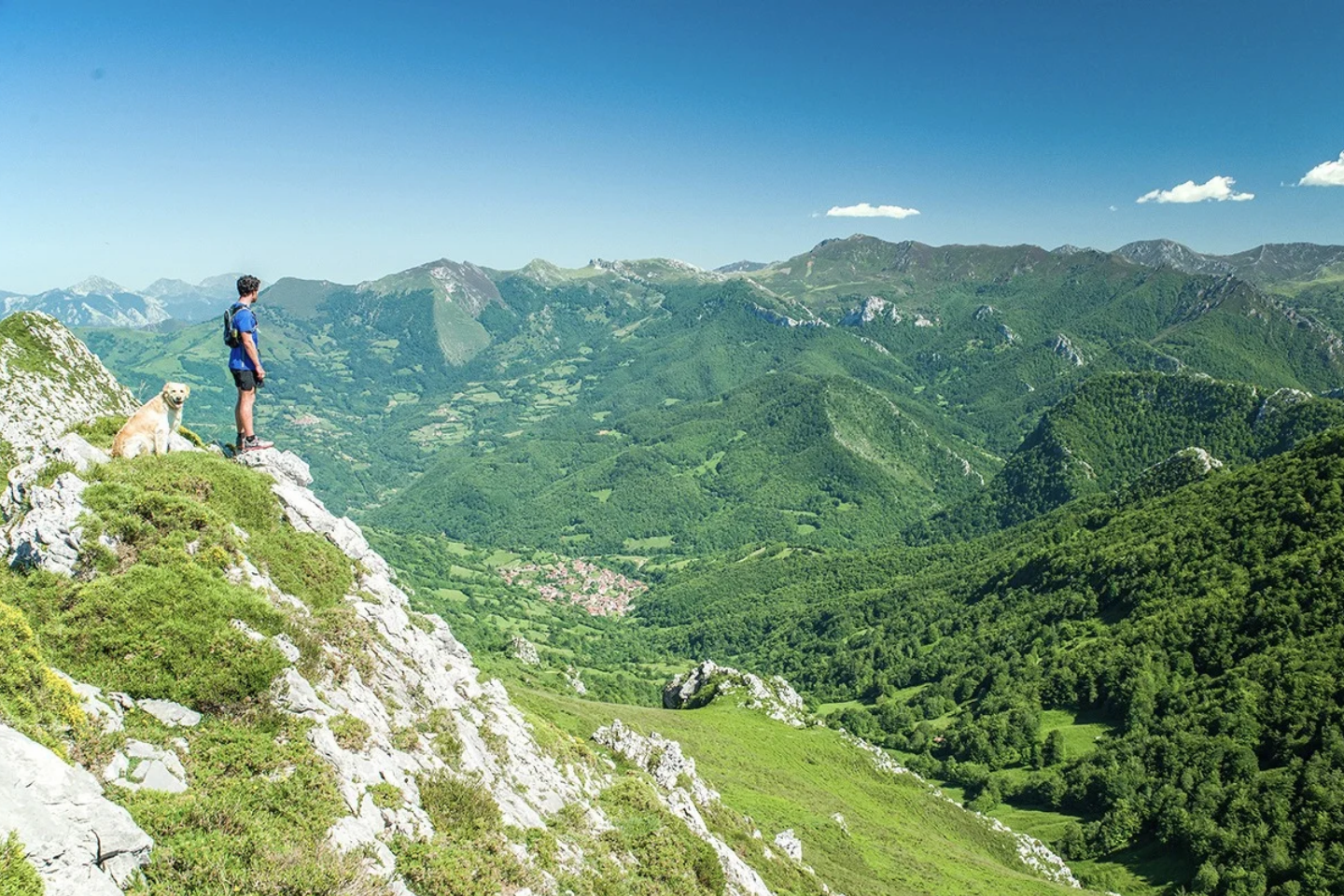
Beech forests in Redes Natural Park and Biosphere Reserve (Asturias)
Where is Redes Natural Park and Biosphere Reserve located?
In east-central Asturias, in the heart of the Cantabrian Mountains. The name of the park comes from the Redes beech forest, in Caso, which gives an idea of the importance of these deciduous trees in the area. The main settlements stand alongside the River Nalón, which rises in the park, with the AS-17 road running beside it. In Campo de Caso (El Campu) is the park’s visitor reception and interpretation centre, the ideal place to ask for maps, information and advice before setting off
What is special about Redes Natural Park and Biosphere Reserve?
Redes is one of the most heavily wooded areas of Asturias, and the extent of its forests and the conservation of its water resources were the main reasons for its protection. It was declared a natural park in 1996, and UNESCO recognised it as a Biosphere Reserve in September 2001. It is also the birthplace of the River Nalón, the longest river in Asturias. Its waters, thanks to the Tanes-Rioseco reservoir system, supply a large part of the population of central Asturias, so it could be said that anyone who turns on the tap in Oviedo or Gijón is drinking a little bit of Redes.
What is the best time to visit Redes Natural Park and Biosphere Reserve? And an experience to discover it?
You don’t need a PhD in Botany to know that, when beech trees are involved, the best time of year to visit the park is autumn. This experience allows you to stay in the very heart of the beech forest, step outside the door and enter straight into the woodland, with all its therapeutic and health benefits. The old forest paths provide the setting for family walks, wildlife and plant observation, and mushroom-hunting expeditions. The experience does not stop at the trees: it also invites you to discover the villages in the area and their still very traditional way of life.